English or Spanish?
/ING-glish or SPAN-ish/phrase · noun
A TikTok meme cue for the freeze challenge where moving first supposedly means you are gay.
- #internet slang
- #TikTok memes
- #freeze challenge
- #prank format
- #language meme
Meaning
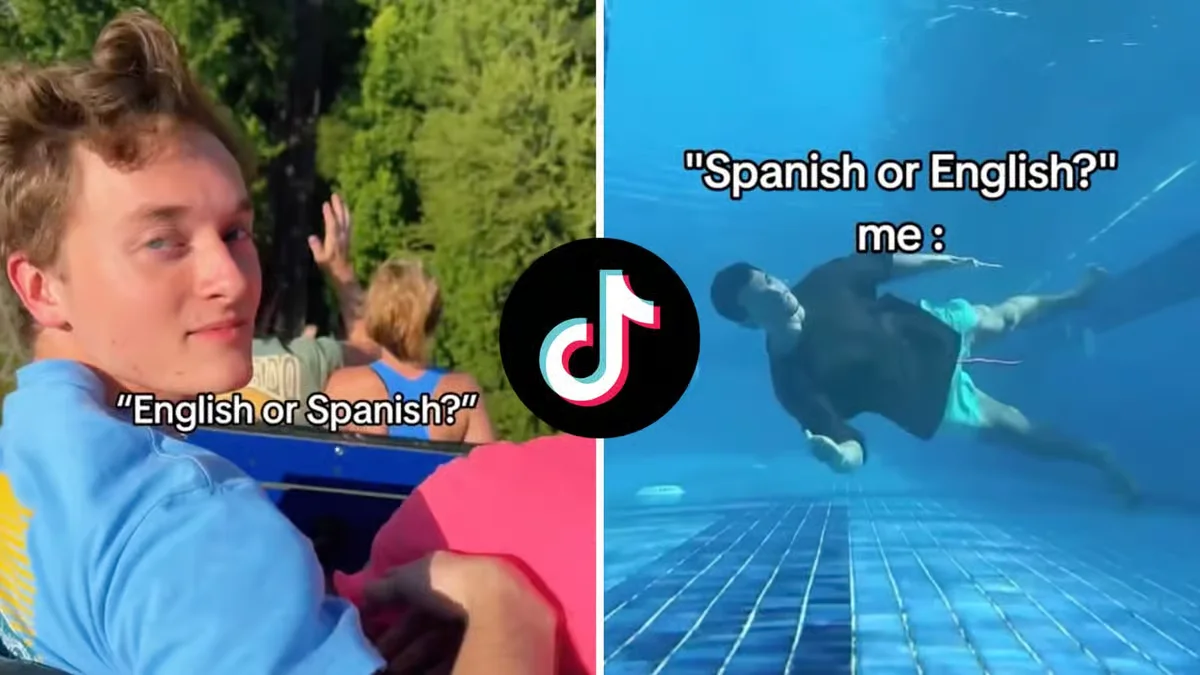
As an internet expression, “English or Spanish?” refers to a TikTok prank and the memes built around it. The speaker asks which language someone speaks, then says that whoever moves first is gay. The target is expected to freeze, so the question alone can signal the upcoming dare or the whole format. Outside that context, it remains an ordinary question about language.[1][2][3]
- 1. A recognizable opening cue for the “whoever moves first is gay” freeze challenge. Someone may say it without repeating the dare because listeners are expected to recognize what comes next.
- 2. A standalone meme prompt used in edits, captions, or exaggerated scenarios involving freezing or refusing to move. Its meaning depends on recognition of the TikTok format, not on the literal language question itself.
- 3. In ordinary conversation, it simply asks whether someone speaks English or Spanish and has no necessary connection to the meme.
Examples
“English or Spanish?”
“I heard English or Spanish? and immediately froze.”
“The elevator doors opened, and someone whispered English or Spanish?”
“That floating-in-space edit turns English or Spanish? into a freeze-joke setup.”
Origin and spread
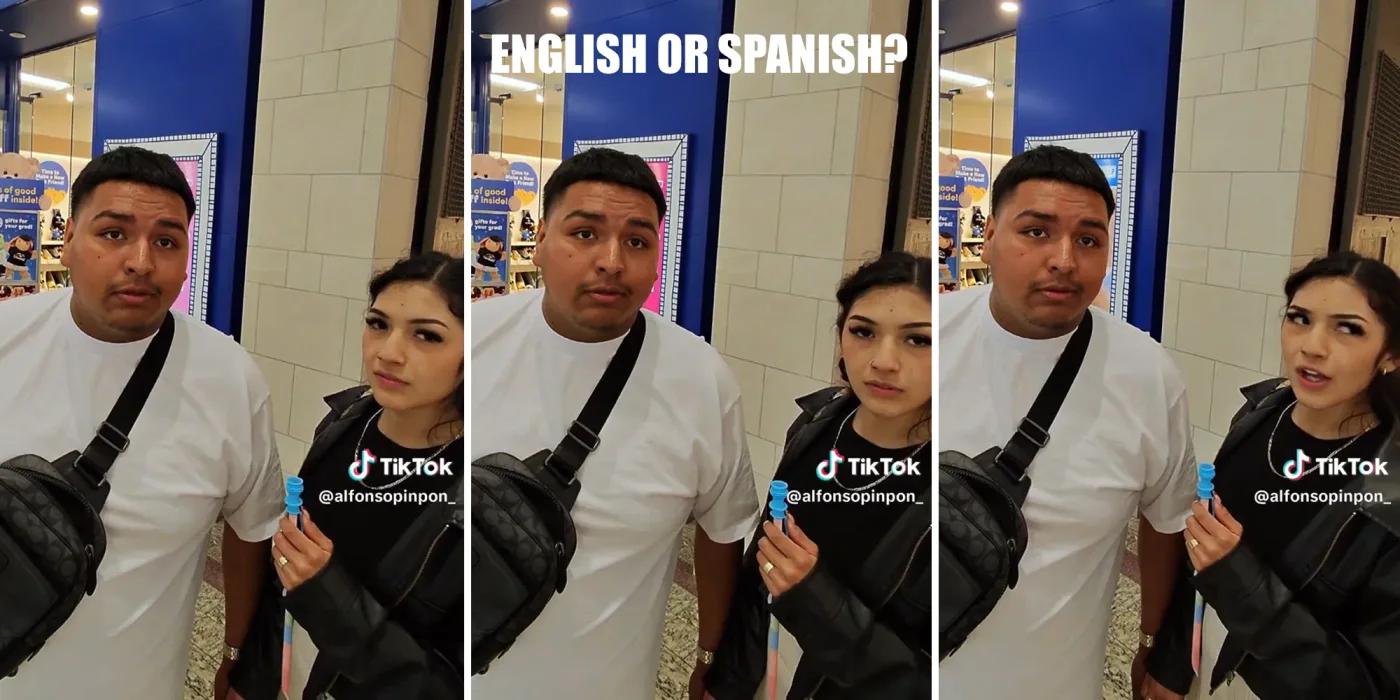
Know Your Meme and The Daily Dot identify TikToker @alfonsopinpon_ with the prank format. Know Your Meme documents a February 25, 2024 video in which he approached two people in a mall and delivered the challenge in Spanish; later videos used English as well. The Daily Dot reports that asking about language began as a courtesy because the creator spoke Spanish in an area where people spoke English or Spanish, but viewers came to associate the question with the prank. The format spread through further videos, edits, and memes, including an April edit and a May 2024 viral edit using Steve Lacy’s “Static,” according to Know Your Meme. By late May, posts used the question itself as a meme cue. This documents the prank’s early spread, not a confirmed coinage or first-ever use of the exact English wording.[3]
How to use it
Use it informally when the audience is likely to recognize the TikTok reference. The joke is often presented as absurd or self-aware, but its mechanism treats being called gay as a penalty for moving, so it can also carry homophobic implications. A literal language question does not automatically signal the meme.
Why the joke can feel uncomfortable
Dexerto reports two readings: some people find the trend funny because it shows how far straight people will go to prove their sexuality, while others object to its potential homophobic undertones. The freeze mechanism makes the label function as a threat or penalty, even when the presentation is exaggerated.[2]
The question can stand in for the dare
The Daily Dot describes the phrase as becoming a meme in its own right: people may use “English or Spanish?” without stating the punchline because the audience is expected to anticipate the demand to remain still. A literal language question, however, does not by itself prove that the prank is intended.[3]
A reported couple reaction
In one Daily Dot-described video involving a couple, the boyfriend freezes while his girlfriend moves, looks at him, and laughs. That is a reaction within the prank video, not evidence about every viewer’s response.[3]
Questions people ask
Is “English or Spanish?” always a meme?
No. It is still an ordinary bilingual question in everyday conversation. The meme sense appears when the speaker or surrounding content invokes the TikTok prank and its freeze challenge.[3]
What is different about the question and “Whoever moves first is gay”?
“Whoever moves first is gay” is the dare or punchline. “English or Spanish?” comes before it and became a shorthand cue that can reference the setup without repeating the dare.[1][3]
Is the phrase affectionate, ironic, or homophobic?
It can be staged as absurd or self-aware humor, and some coverage describes amusement at the exaggerated freeze response. The premise still relies on treating being called gay as something to avoid, so homophobic implications are part of the format rather than something the phrase automatically escapes.[2][3]
Sources
- 1. Know Your Meme — English or Spanish?Supports: meaning, earliest documented use.
- 2. Dexerto — TikTok’s ‘English or Spanish’ meme trend explainedSupports: meaning.
- 3. The Daily Dot — Do You Speak English Or Spanish? The Meme Making People GaySupports: origin, meaning.