gaslight, gatekeep, girlboss
/GAS-lyt GAYT-keep GURL-bawss/phrase
A mock motivational slogan about pursuing success through manipulation and exclusion.
- #satire
- #internet memes
- #girlboss
Meaning
Gaslight, gatekeep, girlboss is an ironic slogan that pairs a polished success label with two words for manipulative or exclusionary behavior. It often mocks a version of empowerment that overlooks how someone gets ahead. It can also caption a fictional schemer with deliberate, exaggerated admiration.
- 1. A parody of motivational slogans aimed at ambitious women.
- 2. An ironic caption for a character or situation where confidence and bad behavior come bundled together.
Examples
“The finale went full gaslight, gatekeep, girlboss.”
“I put gaslight, gatekeep, girlboss on the fake villain mood board.”
“The joke in gaslight, gatekeep, girlboss is the fake motivational tone.”
“Someone captioned the scheming montage gaslight, gatekeep, girlboss.”
Origin and spread
The slogan circulated online in 2021 as a parody of earnest empowerment language. Reporting connected its rise to a broader reassessment of the girlboss ideal and to motivational formulas such as live, laugh, love. The three-part rhythm helps the phrase sound like a cheery motto even when the words undermine it.
How to use it
Context signals the irony. The line is often aimed at a fictional character or a critique of branding, where people can recognize the gap between the upbeat rhythm and the conduct it names.
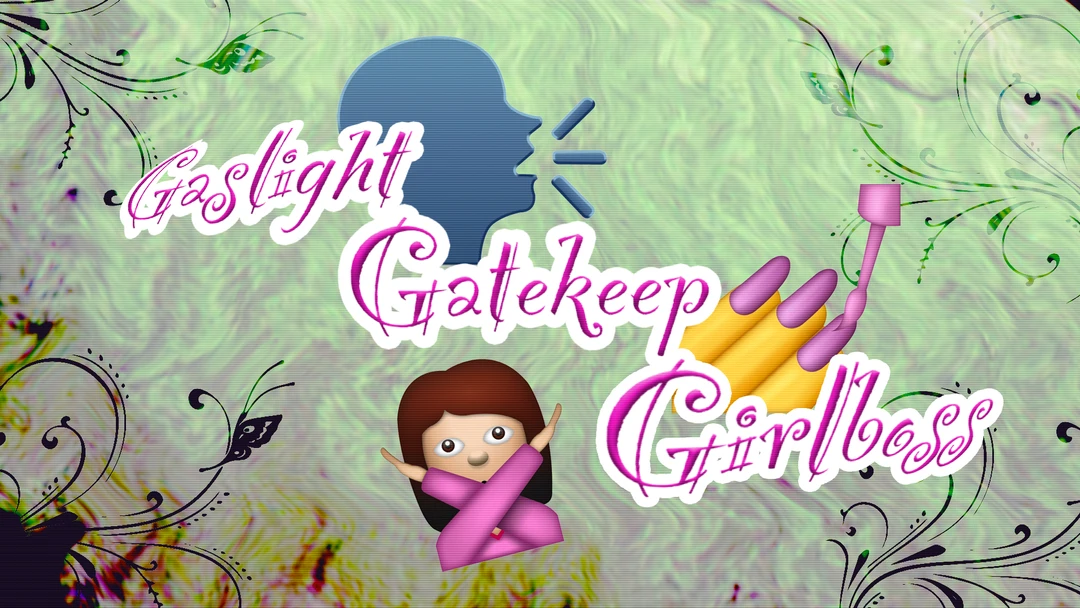
A motivational cadence with an ironic message
The phrase borrows the three-beat sound of live, laugh, love, then swaps in words that make the resulting direction absurd.[1][2]
Everyday scenes can carry the joke
The Starbucks example places the slogan in an ordinary errand, where the outsized language makes the irony easy to recognize.[1]
Questions people ask
Why does it sound like a motivational quote?
It uses the same three-beat imperative rhythm as short lifestyle slogans. The words flip the expected message.[1]
Can it be used to praise a villain?
As irony, yes. A viewer might enjoy a character's audacity while recognizing the behavior the slogan is mocking.[2]