I Fear
/aɪ fɪr/phrase
A dry or dramatic aside that makes an observation sound like a reluctant admission.
- #queer slang
- #social media
- #reaction phrases
Meaning
In online slang, I fear frames an observation as an admission the speaker has to make, often with deliberate drama. It can introduce a line or sit after it as an aside. The effect can be dry, affectionate or a little cutting, depending on the observation.
- 1. A wry preface to a conclusion the speaker pretends to regret.
- 2. A trailing aside that makes an obvious or inconvenient observation sound more dramatic.
Examples
“I fear the dog has claimed my side of the bed.”
“We bought matching lamps without consulting each other, I fear.”
“I fear this meeting could have been a two-line email.”
“That thrift-store jacket is coming home with me, I fear.”
Origin and spread
The wording is much older than the meme, but its dry, flexible use in online queer slang was visible by September 2024. INTO described the expression in that setting and recorded a creator joking about how often it appeared. Wiktionary documents the parenthetical use and the older sense of expressing regret or apprehension.
How to use it
The words can still express sincere concern. A low-stakes or obvious observation is a good cue that the speaker is playing up the formality.
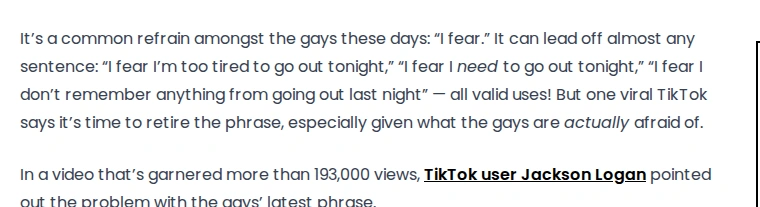
The phrase can make a small problem sound grand
A late bus or a favorite outfit can be delivered with the solemnity of bad news for comic effect.[1]
The position is flexible
Used at the front it sets up the thought. Used at the end it changes how the already-complete sentence lands.[1][2]