Vibecession
/vyb-SESH-un/noun
A period when the economy feels worse to the public than headline data suggest.
- #economics
- #word blends
- #internet culture
Meaning
A vibecession is a period when people feel as though the economy is in a downturn even though widely cited measures paint a less grim picture. The word captures a gap between aggregate figures and the way households experience or talk about the economy.
- 1. An economy-wide mismatch between poor sentiment and comparatively stronger data.
- 2. A shorthand for discussing why headline figures and everyday financial feelings can diverge.
Examples
“The jobs report was strong, but the podcast called it a vibecession.”
“Our group chat still sounds like a vibecession after that upbeat report.”
“She used vibecession to describe why confidence lagged behind job growth.”
“The panel debated whether vibecession fit what shoppers were feeling.”
Origin and spread
Kyla Scanlon titled her June 30, 2022 newsletter “The Vibecession: The Self-Fulfilling Prophecy.” NPR's Planet Money took up the term in September 2022. In a later St. Louis Fed interview, Scanlon explained that the word grew from a mismatch she saw in 2022 between people's perceptions and economic measures.
How to use it
The word is most precise when there is a gap between the mood and the measures being discussed. It leaves room for pockets of real financial stress within an economy.
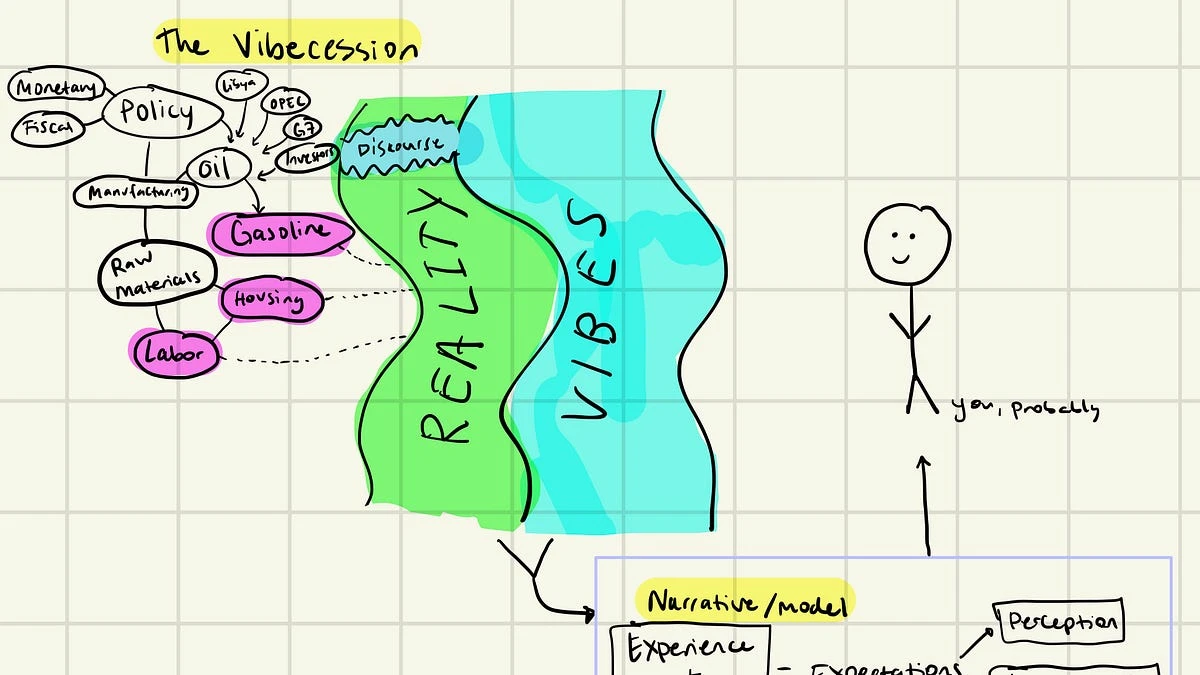
What the gap measures
The label invites a comparison between how people describe the economy and the aggregate indicators used to describe it.[1][2][3]
Headlines and household experience
People can feel strained by specific prices or costs even while a national figure measures improvement elsewhere.[1][2][3]