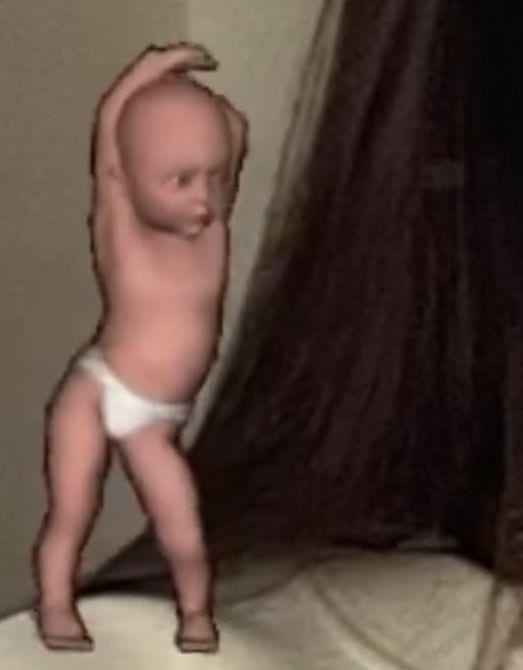
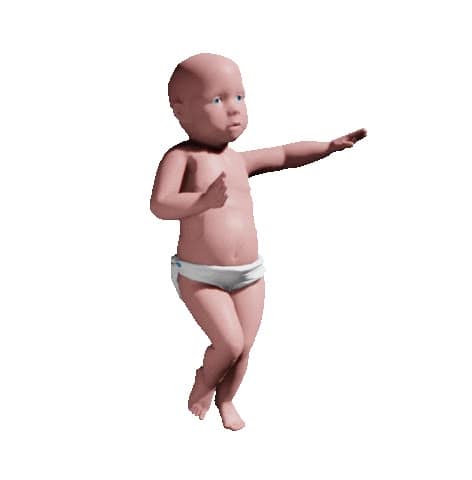
Dancing Baby is a loop of a diapered 3D infant performing an adult cha-cha routine. It is one of the clearest surviving examples of virality before feeds and video platforms: people copied the file, forwarded it by email, placed it on personal pages, and rendered their own versions.
Its ancestry is a bundle of software assets rather than one finished film. Viewpoint DataLabs supplied a scanned “Toddler with Diaper” model; animator Robert Lurye developed dance motion while working on technology that became Kinetix Character Studio; John Chadwick used the Physique system to apply the motion to the baby model. Michael Girard and other team members helped build the underlying animation tools.
The exact day the meme began is not responsibly documented. Character Studio was demonstrated in the mid-1990s and released in 1996, while the first broad circulation is associated with 1996. MemePulse therefore records 1996 with an uncertain day; January 1 is only a technical database fallback, not a claimed premiere date.
LucasArts animator Ron Lussier found the assets, recombined the baby with the cha-cha motion, adjusted the result, and circulated an AVI through colleagues and a CompuServe forum. Developer John Woodell is credited with making a lightweight animated GIF that could travel more easily across the early web. Both routes helped turn a demo file into something people passed around for its own strange appeal.
External media is blocked until you choose to load it.
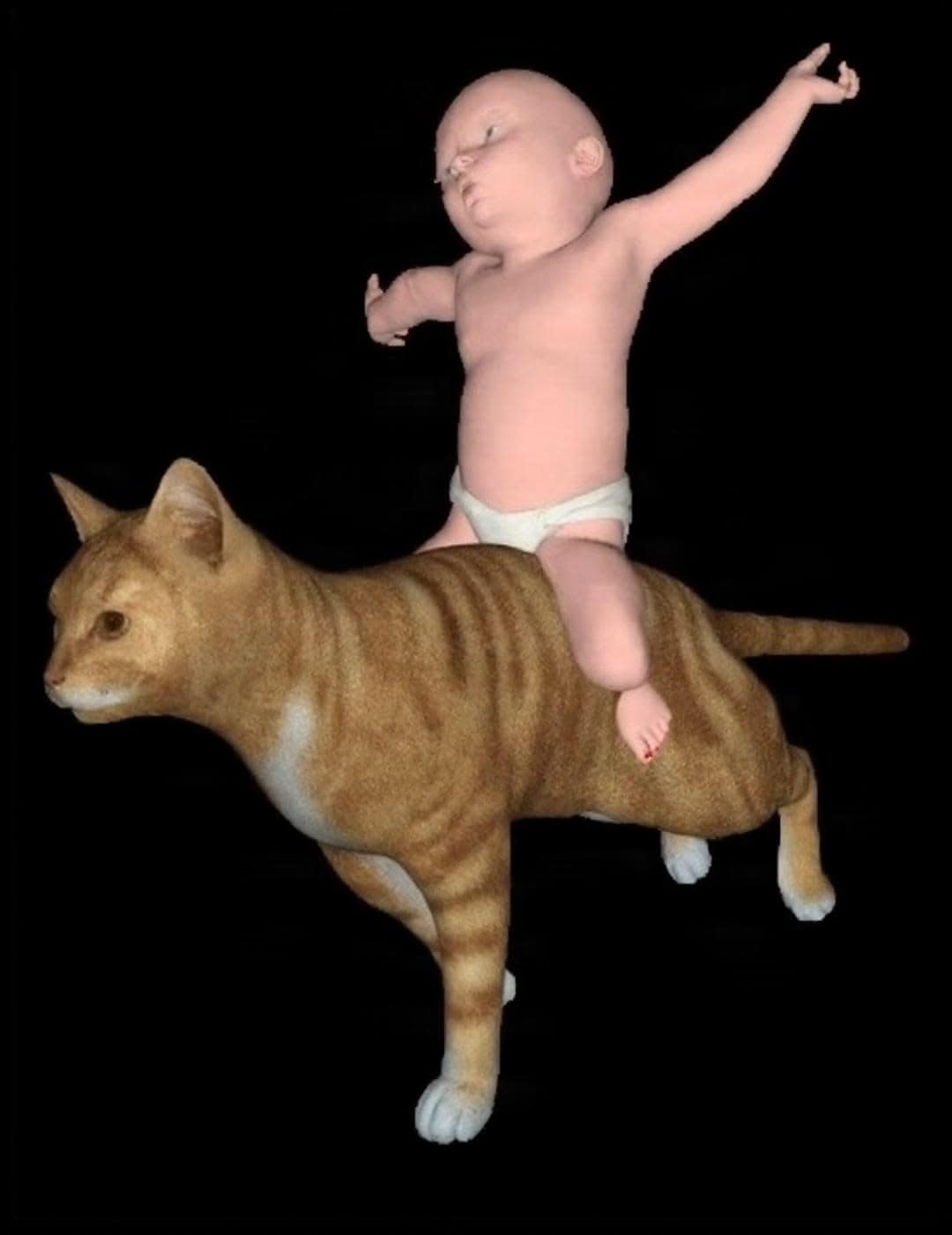
The loop arrived at exactly the right technological moment. It was small enough to forward but polished enough to look startling on a mid-1990s home computer. Its uncanniness also encouraged variation: users replaced the model, altered the dance, or attached different soundtracks rather than merely watching it once.
In April 1997, then-teenage artist Rob Sheridan opened the Unofficial Dancing Baby Homepage and collected user submissions. Versions included drunk, rasta, samurai, and other babies. The best-known soundtrack paired the dance with the “ooga-chaka” opening of Blue Swede’s “Hooked on a Feeling,” producing the Oogachaka Baby name even though the early circulating animation could be silent.
Mainstream media quickly folded the web object into television, commercials, and music videos. Its most durable appearance came on Ally McBeal. Beginning with the January 5, 1998 episode “Cro-Magnon,” the baby haunted Ally as a surreal visualization of anxiety about time, motherhood, and her biological clock.
External media is blocked until you choose to load it.
That television role reversed the normal direction of adaptation. A file with no conventional plot or owner-defined character became a recurring figure on a major network show, and viewers who had never downloaded an email attachment learned to recognize it. The baby became both an early internet in-joke and a late-1990s mass-media mascot.
Its legacy is not that it was indisputably the first meme—shared jokes and copied digital artifacts are older—but that its path is unusually visible. Software sample, forum upload, email attachment, GIF fan culture, broadcast television: the sequence anticipates how later memes would cross platforms while being repeatedly re-encoded.
External media is blocked until you choose to load it.
Modern artists have continued to reopen the original files. In 2020, JArmstrongArt produced a smooth high-definition render, showing how much detail was obscured by decades of compressed copies. In 2022, members of the original creative team worked with HFA–Studio on a digitally restored version and NFT collection. The cleaner baby looked newer, but the unsettling dance remained exactly what made the 1996 loop travel.
Why It Works
A baby performing an adult dance is instantly readable and slightly wrong. The short seamless loop survives silence, compression, remixing, and repeated viewing, making it ideal for the slow connections and personal pages of the early web.
When It's Used
Today the Dancing Baby signals 1990s internet nostalgia, early CGI, uncanny humor, or deliberately dated celebration. The Oogachaka version adds the remembered soundtrack; silent versions more closely resemble some early file circulation.
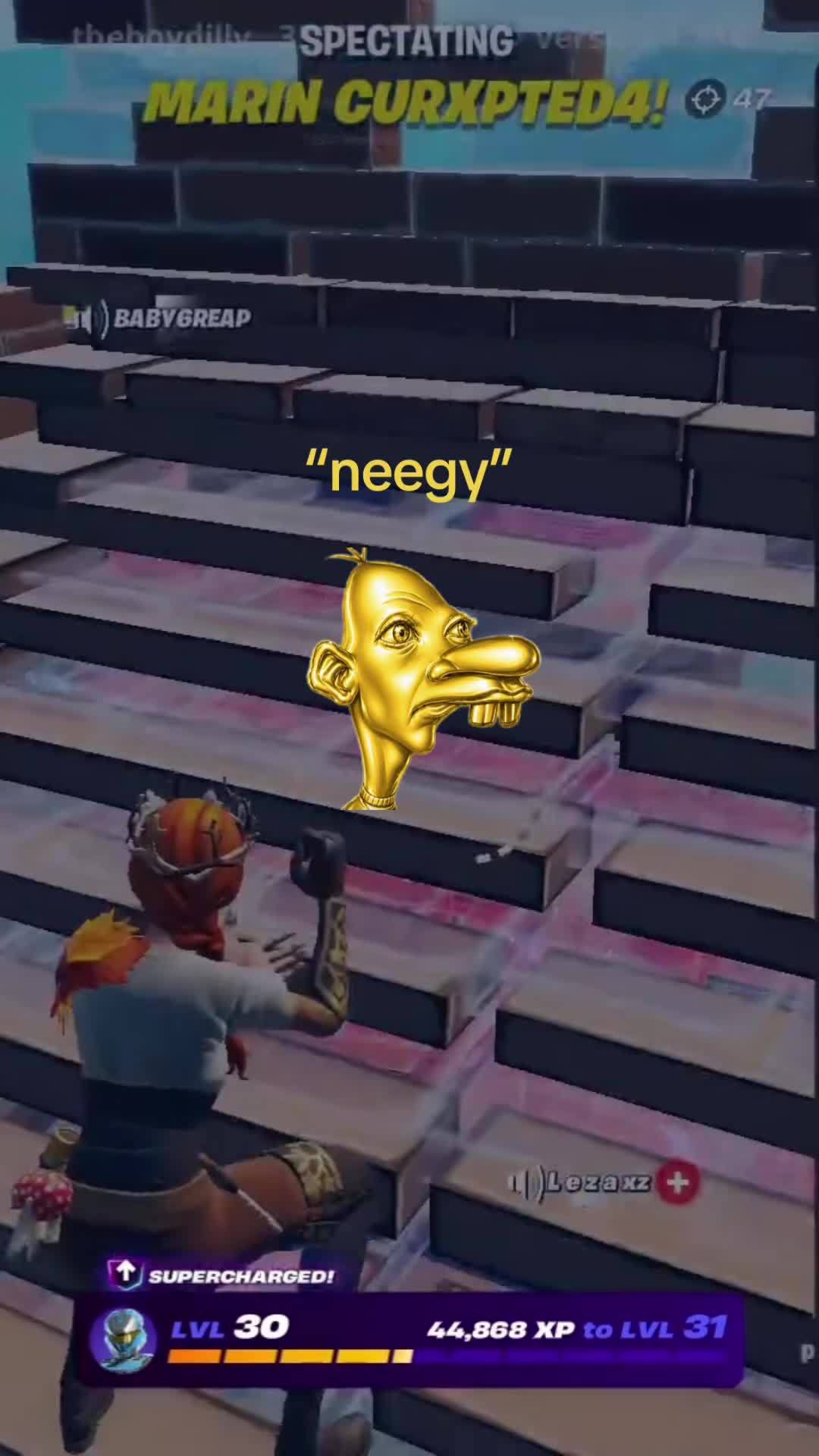
Neegy is a short-form video meme whose documented source format combines Fortnite spectator-view gameplay, a gold long-faced figure, on-screen “neegy,” and a reusable sound. The earliest located verified public use is...Neegy is a short-form video meme whose documented source format combines Fortnite spectator-view gameplay, a gold long-faced figure, on-screen “neegy,” and a reusable sound. The earliest located verified public use is @1104yyh’s TikTok from July 9, 2026, captioned “new slang.” A snapshot checked...
Comments
Loading the live comment thread for this meme.