Bird Theory
/burd THEER-ee/noun
Bird Theory is a social-media relationship idea that treats interest in a tiny observation, such as seeing a bird, as a sign of emotional connection.
- #relationship trends
- #TikTok
- #bids for connection
- #bird test
Meaning
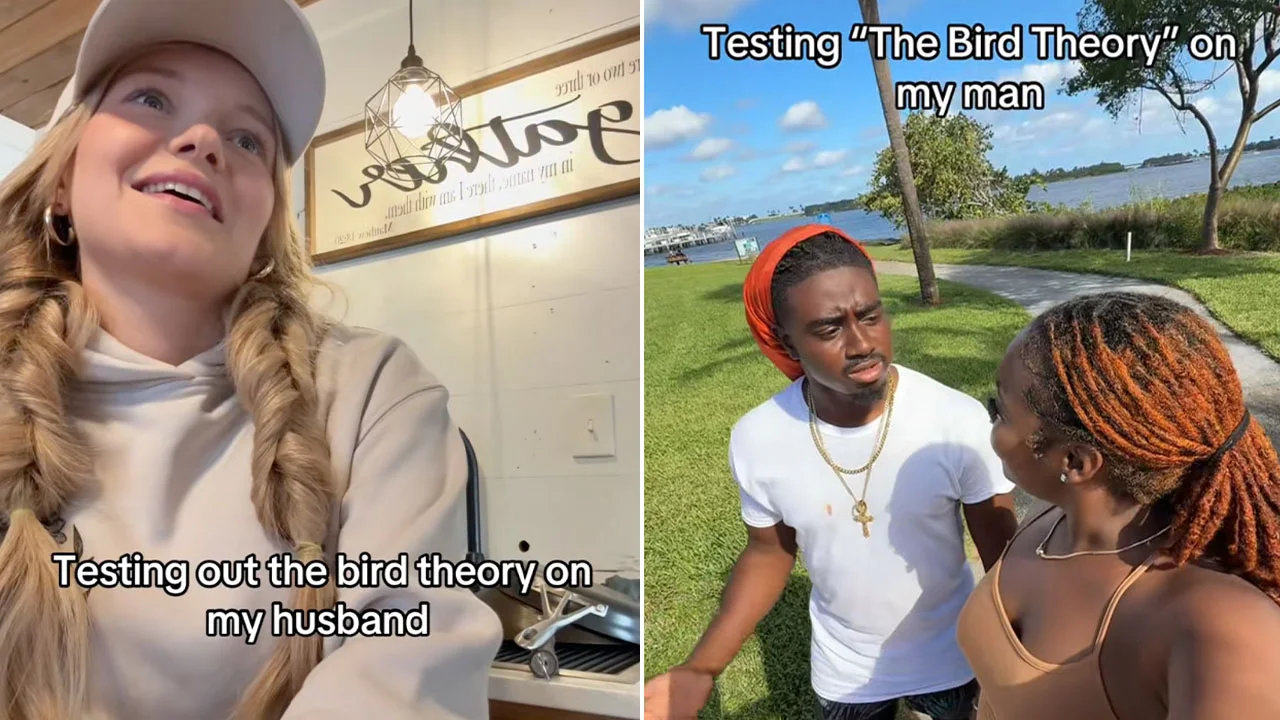
Bird Theory is the idea that someone's response to an apparently unimportant observation can reveal whether they want to connect with you. In its familiar social-media format, the bird test, someone tells a partner they saw a bird and watches for interest. Asking what kind it was, looking over, or responding warmly counts as passing; ignoring the remark is often framed as failing. The point is responsiveness to the person sharing, rather than enthusiasm for birds. The idea also applies to friends and family. It resembles the relationship concept of bids for connection, but a single distracted response cannot establish that someone does not care about you.[2][5]
- 1. As a relationship idea: interpreting curiosity about small, everyday observations as a sign that someone values connecting with you.
- 2. As a filmed social-media test: deliberately mentioning a bird, recording a partner's reaction, and presenting the response as a pass or fail. This is also called the bird test.
Examples
“He asked what kind of bird it was—he passed the bird test.”
“Bird Theory makes me think of how my best friend always asks follow-up questions.”
“We tried the bird test, but she was on a work call, so we laughed and tried talking later.”
“My Bird Theory video became a ten-minute conversation about pigeons.”
Origin and spread
Earliest use not established. Know Your Meme identifies an October 27, 2023 TikTok by Alyssa Caribardi, @alyssacardib, captioned “Bird test,” as one of the earliest viral examples. That documents the related test label by that date; it does not establish the first use of the exact phrase “Bird Theory.” Caribardi's explanation concerned curiosity about seemingly insignificant observations, including outside romance. Simply Psychology recounts her story of getting coffee with a new friend, spotting a woodpecker, and spending about ten minutes watching it and looking up facts together. The underlying idea has an older conceptual counterpart in the Gottman framework of bids for connection: everyday attempts to get another person's attention or affection. The Guardian reports that Julie Gottman used a bird outside a window as an example in 2022. That is an antecedent, without an established direct path to Caribardi's video. By October 2025, reporting documented a renewed wave of couples deliberately mentioning birds and filming the responses. The Independent described affectionate evaluations of partners' follow-up questions, while Know Your Meme recorded comedy versions, including a response invoking Birds Aren't Real. The format turned an observation about everyday attention into a repeatable prompt with a public pass-or-fail judgment.[1][3][4][5]
How to use it
Use Bird Theory for the relationship idea and bird test for the activity, although coverage often uses the names interchangeably. Saying someone passed can be affectionate or playful; saying they failed can imply emotional disinterest and carries more weight. A warm acknowledgment or a simple follow-up question can count as engagement—bird knowledge is unnecessary. Interpret a response in context: confusion, work stress, or divided attention can explain a missed remark. The useful question is how someone responds across everyday interactions.
Why a few follow-up questions can become the whole video
The Independent describes Courtney celebrating her husband Alex's response after he asked what kind of bird she had seen and wished she had taken a photograph. In its coverage of Hannah Brown's test, one quoted commenter called her husband's effort to engage “very sweet.” These particular reactions praise the attention given to the storyteller, rather than any impressive knowledge of birds.[5]
Missing a remark and rejecting it are different responses
The Gottman Institute distinguishes turning away—ignoring or missing a bid—from turning against, or rejecting it argumentatively. A binary bird-test score can blur that distinction. The Guardian also reports that an unexpected bird remark may simply confuse a partner, so confusion alone does not mean they have failed.[3][2]
Questions people ask
Does Bird Theory apply only to romantic partners?
No. Caribardi's early explanation included nonromantic relationships. Simply Psychology recounts her woodpecker encounter with a new friend, and Know Your Meme describes the test being used with friends and family as well as partners.[4][1]
Do you have to mention an actual bird?
A bird is the recognizable prompt in the filmed trend, but the broader idea concerns responsiveness to small observations. Bids for connection extend further still: the Gottman Institute includes questions, expressions, and physical gestures such as an affectionate squeeze.[5][3]
Is “bird” a mistaken version of “bid”?
The sources establish a conceptual connection, but do not establish a mishearing as the name's origin. A bird is a literal example in the trend, and The Guardian reports that Julie Gottman also used a bird outside a window to explain bids for connection in 2022.[1][2][3]
Sources
- 1. Know Your Meme — Bird TheorySupports: origin.
- 2. The Guardian — Is your relationship solid – or sinking? The bird theory thinks it knowsSupports: meaning.
- 3. The Gottman Institute — Want to Improve Your Relationship? Start Paying More Attention to BidsSupports: origin.
- 4. Simply Psychology — Can the ‘Bird Test’ Predict Relationship Satisfaction?Supports: origin.
- 5. The Independent — What is TikTok’s ‘bird theory’?Supports: meaning, origin.