Mood
/mood/noun · interjection
As an internet reaction, “mood” means “that captures how I feel” or “that’s relatable.”
- #internet slang
- #reaction captions
- #online conversation
Meaning
Online, “mood” is a compact reaction meaning that a post, image, situation, or desire captures a feeling you share: “that’s exactly how I feel.” It can be a reply to someone else or a caption on your own post. The target does not have to be literally experiencing a particular mood.[1][4]
- 1. As a reply, “mood” says that someone else’s post captures a feeling or situation you identify with.
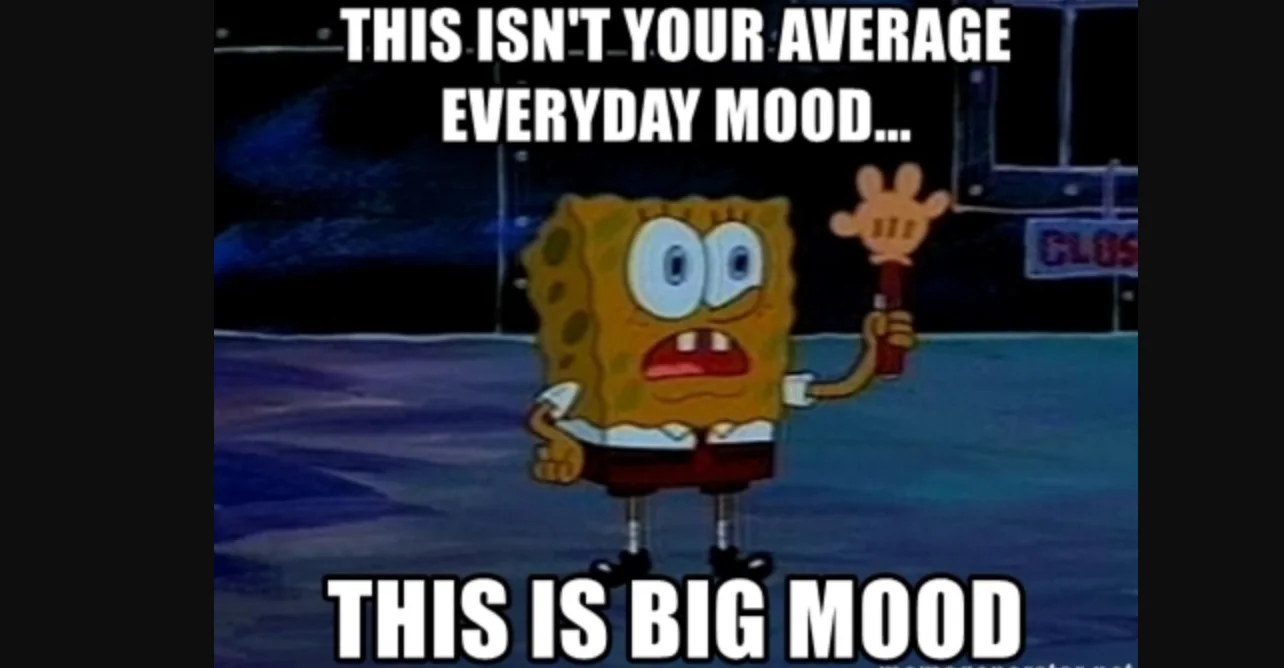
- 2. As a caption, “mood” labels an image or situation as representative of how you feel, what you want, or the energy you are in. “Big mood” is a stronger, more emphatic version.
Examples
“Canceling plans and staying in? Mood.”
“This picture is a mood.”
“Big mood: wanting a quiet day and absolutely no notifications.”
Origin and spread
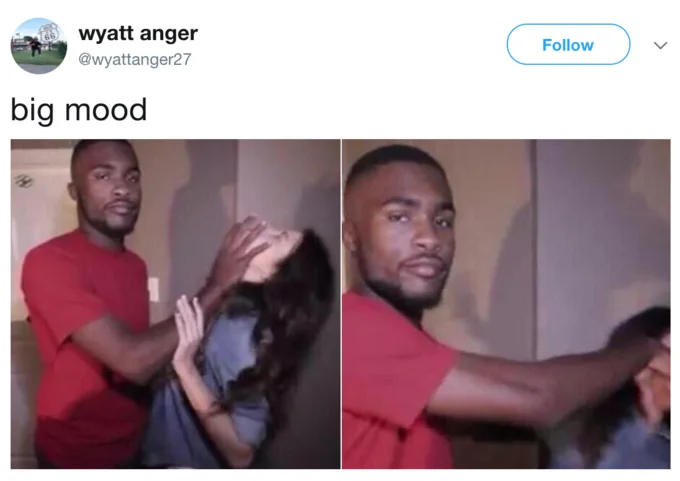
The Daily Dot gives a retrospective account that Black users “coined a lowkey alternative: ‘Mood.’” This attributes a reported development to Black users without identifying a single coiner or establishing the earliest use of bare “mood.” Slang Decoded places the reaction meaning “relatable” around 2015. Know Your Meme describes “big mood” as an evolution of “mood” in that relatable sense; this is a reported account of their relationship, not proof of invention. Know Your Meme dates one early documented “big mood” post to January 7, 2016, while the retrieved X record for that same post displays January 8. A January 16, 2018 Tumblr post tagged “big mood” reportedly gained over 550 notes, a documented example of later circulation. These dated examples document usage, not a first creator or the first use of bare “mood.”[1]
How to use it
“Mood” is informal and often works as a quick, emphatic reply or caption. “Same” directly says you feel the same; “mood” more often says something captures a feeling, though they overlap in practice. “Big mood” intensifies the reaction, but its force depends on context.
A dated example is not a proven first
Know Your Meme gives January 7, 2016, for an early “big mood” tweet, while the retrieved X record displays January 8. The post text alone does not establish what it meant in context, so it is evidence of a dated phrase, not a confirmed first use of the reaction sense.[2][3]
One clip, several readings
Replies to a January 2018 “big mood” video included a joke that it told the commenter to “build a bridge and get over it,” as well as praise for how it described “stepping on the mat.” Those are reactions to that particular clip, not evidence of a universal response to the phrase.[5]
Questions people ask
Does “mood” mean agreement or shared feeling?
It signals identification with a feeling or situation. “Same” more directly says you feel the same, while “mood” says the thing you are reacting to captures a feeling; as short replies, they can overlap.[4]
Can “mood” describe a craving?
Yes. The Daily Dot’s account says it can extend to things someone is in the mood for, as well as captioning a picture that expresses current feelings or replying to show relatability.[1]
Sources
- 1. The Daily Dot — ‘Big Mood’ Is the Twitter Slang You Need to Know Right NowSupports: meaning, origin.
- 2. Know Your Meme — Big MoodSupports: earliest documented use.
- 3. X — A Danger Pov, “big mood”Supports: earliest documented use.
- 4. Slang Decoded — Mood Meaning: What Does “Mood” and “Big Mood” Mean?Supports: meaning.
- 5. ✩ the people’s queen ✩ on X: "big mood" / X