Ok honey
/oh-KAY HUN-ee/interjection · phrase
“Ok honey” can be warm between people close to each other, but in a disagreement it often sounds patronizing and dismissive.
- #internet slang
- #online tone
- #terms of endearment
- #sarcasm
Meaning
“Ok honey” is a context-dependent acknowledgment built from “OK” and the affectionate address “honey.” Between people who are close, it may be warm or reassuring. In a disagreement, correction, or tense exchange, the same words can plausibly read as a patronizing brush-off that closes the conversation. That dismissive reading is a contextual interpretation rather than an established fixed meaning of the exact phrase, and the available sources do not establish a separate online definition or show that it inherently implies naivety. The phrase is not inherently sexual.[1][2]
- 1. Affectionate acknowledgment: between close people, “Ok honey” may be a warm way to agree or show understanding.
- 2. Dismissive or patronizing reply: after a disagreement, it can read as a conversation-ending brush-off that treats the other person as naive.
Examples
“You remembered the snacks? Ok honey, I’m on my way.”
“You can keep explaining. Ok honey, I’ve heard enough.”
“Ok honey, we’ll talk about it later.”
Origin and spread
There is no verified creator, first post, platform, or viral moment for “Ok honey” in the available evidence. The phrase combines “OK,” which Cambridge defines in part as a response showing agreement, with “honey,” an affectionate form of address. The shift from warmth to condescension depends on the relationship and exchange around it. Separate research summarized by SPSP describes how terms of endearment may be received outside close relationships, but it does not document the origin or interpretation of this exact phrase as a meme.[3]
How to use it
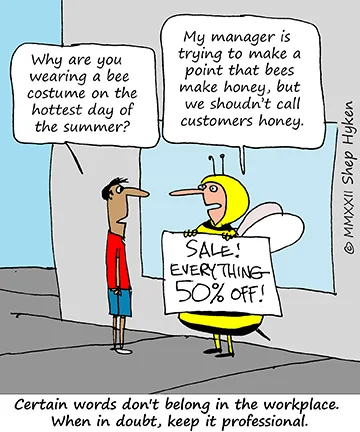
Read the surrounding exchange: following a correction or argument, “Ok honey” may sound sarcastic; between close people it may be affectionate. Since tone is easy to misread in text, avoid using it to dismiss someone you do not know well, especially at work.
Why “honey” can land differently
Cambridge records “honey” as an affectionate form of address. SPSP summarizes studies in which adult women sometimes felt less positive and less competent when terms of endearment were used toward them; the reported differences depended in part on whether they endorsed benevolent sexism. The article also reports no gender difference among younger participants. These findings concern endearments generally, not the exact phrase “Ok honey.”[1][3]
A reported workplace exchange
Psychology Today recounts a courtroom exchange in which an attorney called a judge “Honey”; the judge said she was “a little thrown by that also.” This is a reported reaction to “Honey,” not evidence of a reaction to the exact online phrase.[4]
Questions people ask
Does “Ok honey” always mean the speaker is being sarcastic?
No. The Cambridge entries describe “OK” as a response that can show agreement and “honey” as an affectionate address. Those component meanings do not establish how the exact phrase works in every exchange; the warm or dismissive reading is a contextual interpretation based on the relationship and surrounding conversation.[1][2]
Sources
- 1. Cambridge Dictionary — HONEY | English meaningSupports: meaning.
- 2. Cambridge Dictionary — OK | definition in the Cambridge English DictionarySupports: meaning.
- 3. Society for Personality and Social Psychology — “Honey, Sweetie, Dear”: More Than Mere NicetiesSupports: origin.
- 4. Psychology Today — When Honey Is Not So Sweet
- 5. Is It Okay to Call a Customer or Employee Honey? - Shep Hyken | Customer Service Expert