Orange Peel Theory
/OR-in peel THEE-uh-ree/noun
An informal relationship test that reads a response to a small favor as a possible sign of care.
- #internet slang
- #relationship trends
- #acts of service
- #TikTok culture
Meaning
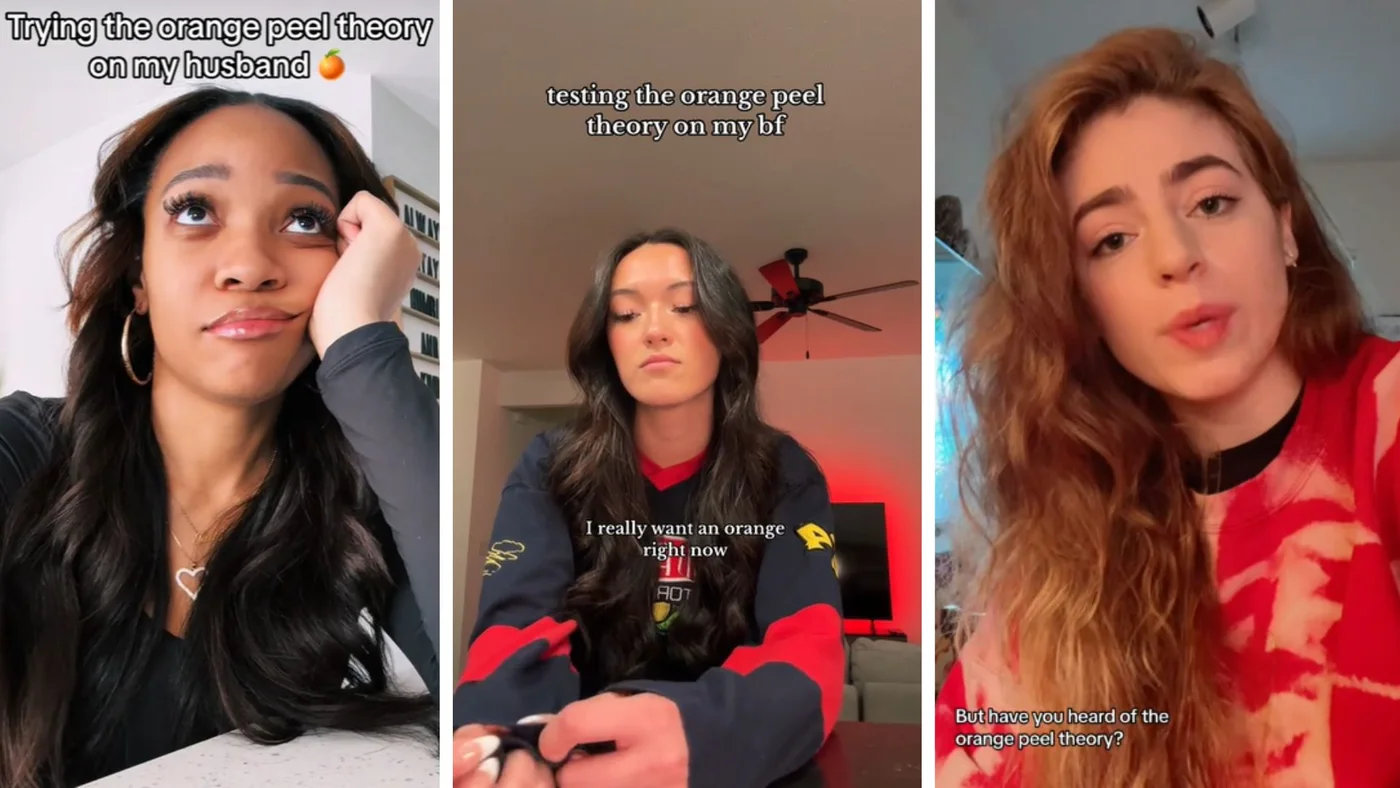
Orange Peel Theory is a social-media shorthand for noticing how someone responds to a small favor, often an everyday request such as peeling an orange. A willing, kind response may be read as care or attention; the orange is only the familiar example, and the idea can extend to other helpful gestures and relationships beyond romance. It is an informal heuristic, not a reliable relationship test: one response depends on context, timing, capacity, and how the request is made.[2][3]
- 1. A relationship test: one person makes a small request and treats the other person’s reaction as a possible clue about care or willingness to help.
- 2. A broader shorthand for noticing small acts of service, including gestures that do not involve citrus and relationships that are not romantic.
Examples
“She brought me coffee before my early shift; that’s the kind of thing people mean by Orange Peel Theory.”
“Making coffee before my early shift was his Orange Peel Theory moment.”
“Orange Peel Theory is less about oranges than how someone handles a small request.”
Origin and spread
The phrase pairs the concrete task “orange peel” with “theory,” framing a response to a small act as something to interpret. Know Your Meme traces the trend’s viral precursor to a November 4, 2023 TikTok slideshow from Things I Can’t Send, which showed an exchange between exes reminiscing about having oranges peeled for them. Know Your Meme separately documents a November 11 use of the named phrase by @neanotmia. Examples reported by Know Your Meme and Elite Daily include cutting a burger and carrying groceries, without establishing a sequence of development. These are documented records, not proof of invention.[1][2][3]
How to use it
Use the phrase for a light, informal observation about care or willingness to help, not as a dependable measure of relationship health. A refusal, sigh, delay, or mistake can reflect circumstances rather than lack of care; one small interaction cannot settle what a relationship is like.

The orange is a symbol, not a rule
Elite Daily notes that the concept often involves no citrus and gives examples such as carrying groceries or making a bed. The phrase can describe attention to small helpful gestures, not only an orange-peeling request.[3]
One reported orange-peeling anecdote
Elite Daily reports a user saying someone peeled an orange after being asked, but did so with a heavy sigh and eye-rolls; the user said they then peeled their own oranges. This is an anecdote, not evidence that one reaction has a fixed meaning.[3]
It can apply beyond romance
TIME describes the idea being used in other relationships too, including a parent responding enthusiastically when a child asks for help carrying a backpack.[2]
Questions people ask
Does passing the Orange Peel Theory test prove a relationship is healthy?
No. The sources describe an informal social-media interpretation of a small act, not a validated assessment. A response can be shaped by timing, ability, mood, expectations, and the way the request is made.[1][2]
Does Orange Peel Theory require someone to peel an actual orange?
No. The orange is the familiar example, but the concept commonly extends to other small acts of service, such as preparing food, carrying something, or making a routine task easier.[2][3]
What is the earliest documented named use?
Know Your Meme identifies a November 11, 2023 TikTok by @neanotmia as the earliest named use it found. A November 4 slideshow is documented as the viral precursor, but neither record establishes an inventor.[1]
Sources
- 1. Know Your Meme — Orange Peel TheorySupports: earliest documented use, origin.
- 2. TIME — TikTok's Orange Peel Theory, ExplainedSupports: meaning, origin.
- 3. Elite Daily — TikTok’s Orange Peel Theory Helps Assess RelationshipsSupports: meaning, origin.