The Great Meme Reset of 2026
/thuh grayt meem ree-set uhv twen-tee twen-tee-six/noun · phrase
A mostly playful proposal to revive older memes at the start of 2026 and push back against brainrot formats.
- #internet slang
- #TikTok culture
- #meme history
- #digital nostalgia
- #brainrot
Meaning
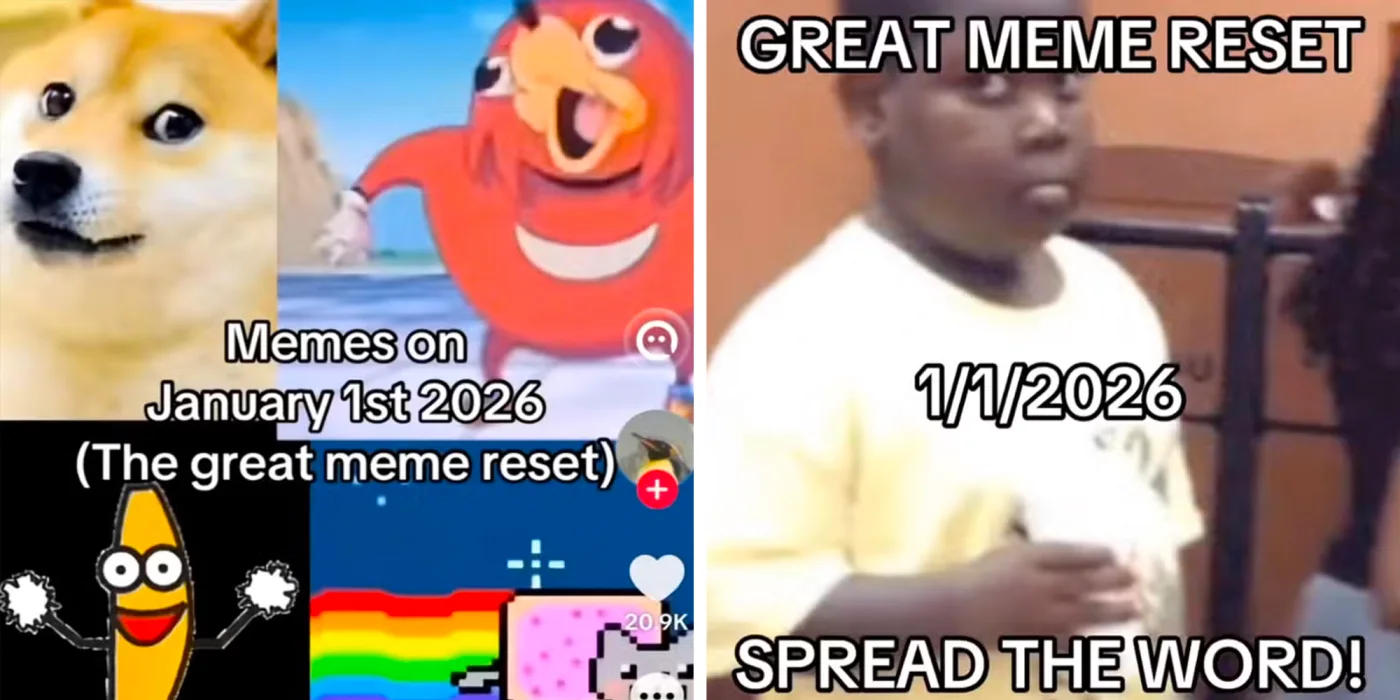
The Great Meme Reset of 2026 was a TikTok-led proposal to begin 2026 by reviving older internet memes and rejecting newer brainrot or rapidly expiring formats. It was a symbolic cultural campaign, not a technical deletion of memes or a reliably coordinated platform event. After January 1, reporting described the attempt as unsuccessful, while reactions to that failure became part of the joke.[1]
- 1. A proposed nostalgia campaign in which users would bring back older memes, often associated with 2016 or earlier internet culture, instead of circulating newer brainrot formats.
- 2. A retrospective label for the failed attempt and the follow-up posts about its failure. The phrase can be playful, but some appeals also expressed genuine dissatisfaction with the speed and incoherence of online humor.
Examples
“The Great Meme Reset of 2026 is really happening, right?”
“I’m posting Doge for The Great Meme Reset of 2026.”
“The Great Meme Reset of 2026 failed, so the failure memes took over.”
“Our group chat is treating January 1 as The Great Meme Reset of 2026.”
“Calling it The Great Meme Reset of 2026 was dramatic; nobody could erase newer memes.”
Origin and spread
The idea developed in distinct stages. In March 2025, @joebro909 posted a comedy skit about the March meme drought using the phrase “the great meme reset”; its premise was wiping memes to address the drought, not returning to 2010s memes on a specified date. On September 16, @ieat_mangoes proposed “The Great Meme Reset” without naming 2026. On September 20, @golden._vr posted a countdown to December 31, 2025, at 11:59, helping attach the later proposal to the start of 2026. Subsequent TikTok posts and coverage framed the plan as a revival of older formats, with 2016 a common nostalgia reference, though examples ranged across many years. The campaign spread across TikTok and other social platforms in late 2025. The New York Times later described it as a fantasy that spread through TikTok, with many calls made jokingly and some expressing quasi-earnest concern about online culture. After January 1, 2026, it reported that the promised purge had not happened and that videos about the failure became a new genre of content. Earliest use of the fully formed title is not established: the earliest documented phrase and the later 2026-specific proposal are separate stages, and the cited original posts were not independently readable here.[2][3][4]
How to use it
Use it for the 2026 meme-revival proposal or for commentary on its failed rollout. It is usually ironic or nostalgic, but it can also signal real frustration with fast-moving, hard-to-explain meme formats. Do not use it to suggest that TikTok literally deleted content or that every user followed a coordinated reset.
It was symbolic, not technical
The reset imagined users flooding feeds with older memes; it did not provide a mechanism for deleting or replacing content across TikTok. The New York Times described the idea as a fantasy and explained that algorithmic feeds would continue surfacing content users had already watched and shared.[4]
Failure became part of the meme
The New York Times reported follow-up videos about how the reset failed. One cited reaction asked whether people really expected to be laughing at Big Chungus in 2026, while another expressed disappointment that users did not come together to appreciate older memes.[4]
Not the same as the meme drought
The March 2025 Meme Drought was the earlier complaint about a shortage of fresh or funny formats. The Great Meme Reset was a later proposed response: deliberately revive older formats at the start of 2026.[1][2][3]
Questions people ask
Was The Great Meme Reset of 2026 meant to happen literally?
No. It was framed as a cultural or symbolic reset, sometimes with deliberately dramatic countdown language. It did not mean that a platform would erase memes, and reporting after January 1 described no coordinated purge.[1][4]
Sources
- 1. Know Your Meme — The Great Meme Reset of 2026Supports: meaning, earliest documented use.
- 2. The Daily Dot — What the “Great Meme Reset of 2026” isSupports: origin.
- 3. Know Your Meme Guide — What Is The Great Meme Reset Of 2026?Supports: origin.
- 4. The New York Times — A Group of TikTokers Tried to Detox Their TimelinesSupports: origin.