We Listen, We Don't Judge
/wee LIS-ən, wee dohnt JUJ/phrase · challenge name
A social-media challenge where people take turns sharing secrets after promising to listen without judging.
- #TikTok challenge
- #confession challenge
- #social media
- #internet phrases
Meaning
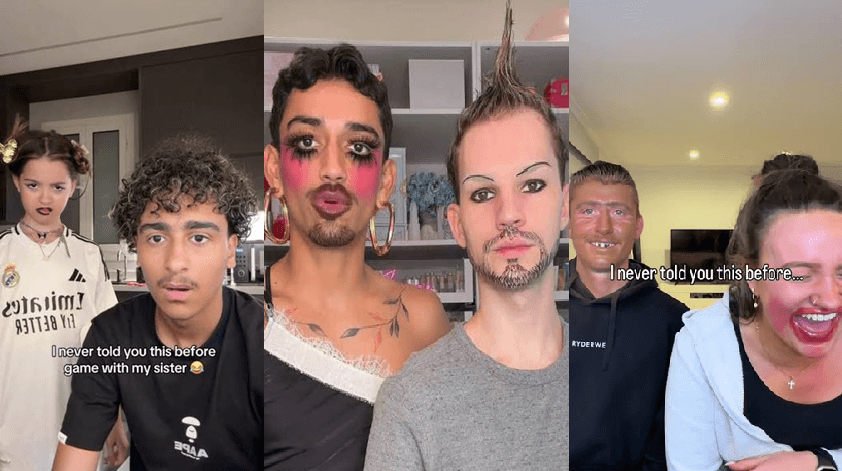
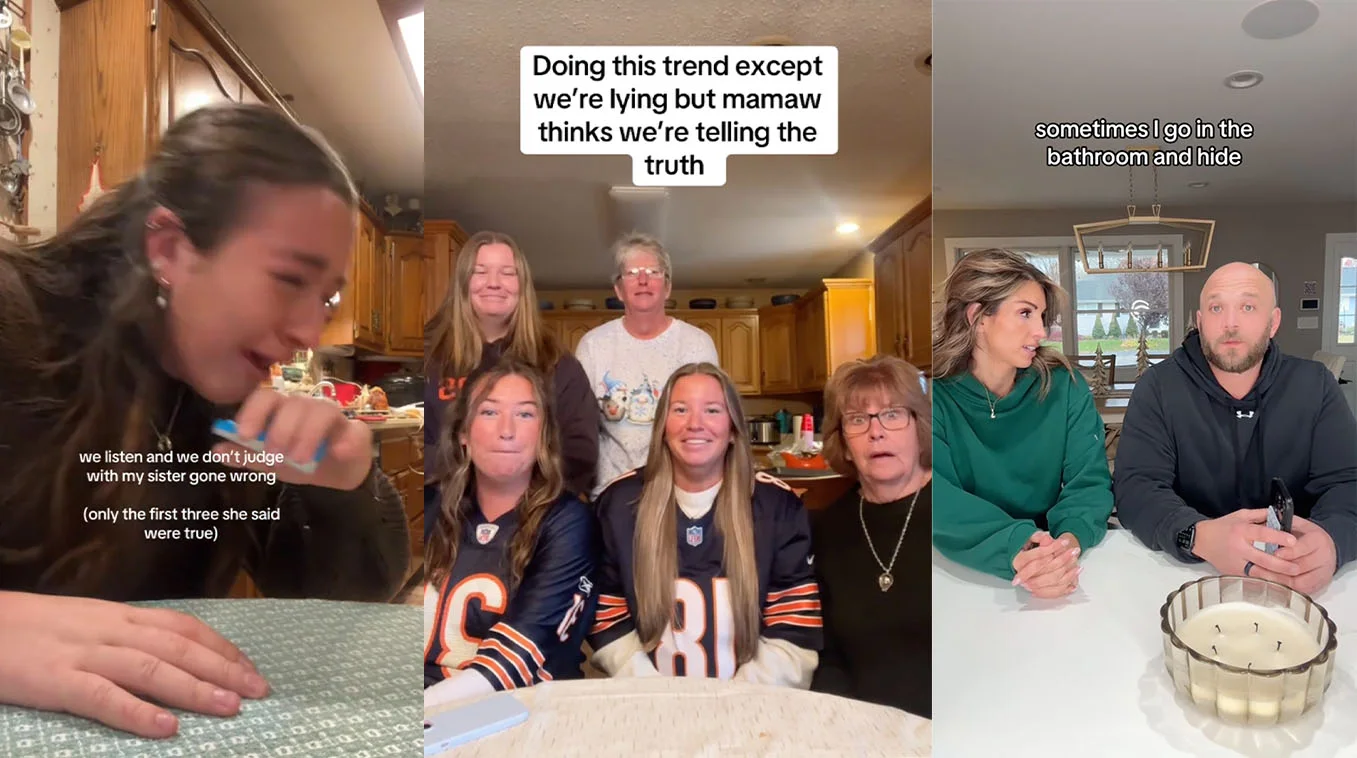
“We Listen, We Don't Judge” is a social-media challenge in which people, often friends, couples, or family members, repeat the phrase and take turns revealing secrets, embarrassing habits, or surprising behavior. The wording promises acceptance, but the public video format makes reactions part of the entertainment, and participants or viewers may judge what they hear. Some disclosures may be exaggerated or fictional, and some raise serious concerns; the format is not a guarantee of privacy or a dependable account of what happened.[1][2][3][4]
- 1. As a named challenge, it prompts people to take turns making confessions, often repeating the phrase if someone reacts.
- 2. Outside the challenge, it can be a playful preface to a confession; whether it offers genuine discretion depends on context.
Examples
“We Listen, We Don't Judge: I reheated the coffee three times and still forgot to drink it.”
“We Listen, We Don't Judge: I said I was five minutes away while still looking for my keys.”
“We Listen, We Don't Judge, but that confession needs a follow-up conversation.”
Origin and spread
Know Your Meme describes the challenge as growing out of South Africa in 2024. It reports an early contextualized example as an Instagram sketch by @thestanlley1, posted on April 21, 2024, in which friends made humorous confessions while repeating the phrase. The challenge gained traction on TikTok in November 2024, including US videos posted from November 21 onward. The format later appeared in variations, including pop-culture “editions” and breakup versions. These accounts document examples and spread, not a definitive inventor or first-ever use of the wording.[1][2]
How to use it
The phrase sounds reassuring, but a challenge video is public performance, not confidential or necessarily sincere listening. Some confessions may be staged or exaggerated, while others can concern serious or hurtful experiences. Don't assume a video proves the disclosure is true, or that the phrase makes judgment-free conversation safe.
The promise and the performance
The repeated promise sets up the confession, but the format invites reactions: The Daily Dot notes that participants and online viewers judge what they hear. Treat the phrase as part of a public challenge, not a promise of confidentiality.[2]
One confession, different reactions
Glamour reports that a confession in a Quist family video drew one comment calling it “DIABOLICAL” and another praising the idea as smart. That example shows how reactions can diverge; it does not establish a general audience response.[4]
Not every confession is harmless
IOL's South African report discusses challenge confessions involving teenagers and older men, and raises related social and health concerns. The trend can move beyond comic habits, so a serious disclosure should not automatically be treated as a joke.[3]
Questions people ask
Are the confessions in these videos necessarily true?
No. IOL notes that disclosures may be real or fictional and may be made for laughs or content creation. A video alone cannot verify a confession.[3]
What are “breakup editions”?
The Daily Dot describes breakup editions as a darker variation that presents a relationship ending after the challenge. That outcome is a variation, not a required part of the basic format.[2]
Sources
- 1. Know Your Meme — We Listen, We Don't Judge ChallengeSupports: meaning, origin, earliest documented use.
- 2. The Daily Dot — Explaining The Viral 'We Listen And We Don’t Judge' TikTok TrendSupports: meaning, origin.
- 3. IOL — ‘We listen, we don't judge’ TikTok challenge takes SA by storm with harrowing and shocking confessionsSupports: meaning.
- 4. Glamour — The ‘We Listen and We Don’t Judge’ TikTok Trend, ExplainedSupports: meaning.