Woobie
/ˈwuːbi/noun
A fictional character whose suffering makes fans want to protect, comfort or defend them.
- #fandom
- #fictional characters
- #fanfiction
Meaning
A woobie is a fictional character whose pain or vulnerability makes the audience want to comfort or protect them. Fans may use the label affectionately or criticize an interpretation that makes a morally complicated character seem more helpless or innocent than the story suggests.
- 1. A character readers want to protect because of what they endure.
- 2. A character fans portray with extra emphasis on their vulnerability.
Examples
“The grumpy detective became my woobie halfway through the second season.”
“I wrote the woobie a quiet chapter where somebody finally makes him dinner.”
“The villain is her woobie, but she still keeps his worst decisions in the story.”
“Fans turned the abandoned robot into the show’s unofficial woobie.”
Origin and spread
The 1983 film Mr. Mom used woobie for a child’s security blanket, a sense independently recorded in 2004 by A Way with Words. A Dreamwidth post from April 2010 shows the fandom sense in a debate about interpreting morally ambiguous characters. A 2018 Canadian Journal of Disability Studies article discusses how the label works on TV Tropes.
How to use it
The word can express affection or criticize the way fans talk about a character. Pay attention to whether the speaker is empathizing with a character or questioning how they are portrayed.
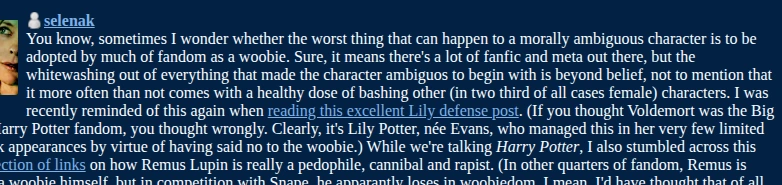
A difficult character can still be a woobie
Fan sympathy can attach to a character’s vulnerability even when the story gives them serious flaws or bad choices.[2][3]
Hurt/comfort is a story structure
Woobie describes a character or the way an audience reads them. A hurt/comfort story can take that reading as its starting point.[2][3]
Questions people ask
What makes a character a woobie?
The audience sees their vulnerability or suffering and wants to protect or comfort them.[2][3]
Why do some fans criticize turning a character into a woobie?
They may feel that foregrounding the character’s pain excuses harmful choices or flattens what made the character interesting.[2]