Polyester Edit
Origin
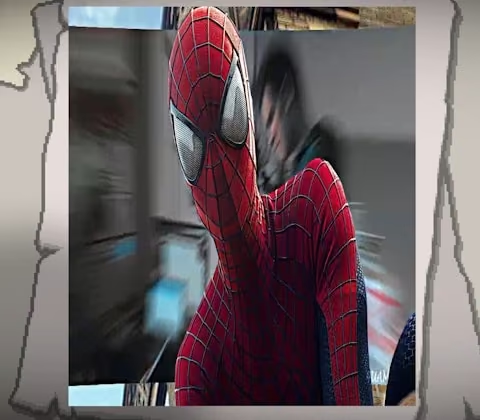
A Polyester Edit puts a character in two places at once. A cutout or full-body pose holds the foreground while clips of the same character flicker behind it, often with aggressive color, sharpening and beat-synced transitions. The name is not a neutral editing term. It is a joke that likens a repeatable, glossy-looking style to mass-produced synthetic fabric—and it now covers both the edits being mocked and parodies that exaggerate them on purpose.
The structure appeared before anyone in the verified record called it Polyester. On October 17, 2025, @jjeditzfilms posted an Iron Man edit built around foreground Tony Stark poses and fast background footage. It used an original sound credited to RJ Pasin and reached 5.9 million views by the August 11, 2026 check. This is the earliest located prototype, not a proven invention; contemporaneous documentation also leaves the creator of the style unresolved.
External media is blocked until you choose to load it.
Open on provider site: The earliest located pre-Polyester prototypeA month later, @foryouamvv applied the same basic display logic to Andrew Garfield’s Spider-Man. An associated Instagram post is dated November 16, while the TikTok timestamp resolves to November 17 in UTC. The TikTok now carries 9.4 million views, but its deeper importance is visual: this was the version later parodies quoted, interrupted and renamed “Polyester Spider-Man.” The superhero did not gain a new canonical costume or identity; one fan edit became recognizable enough to behave like a meme character of its own.
Spread
The meme’s real beginning was a change in interpretation. On July 16, 2026, @useruxia8ob7j1 posted an Iron Man mockery video captioned “WHAT ARE THEY FEEDING THESE EDITORS.” Contemporaneous documentation records its on-screen verdict as “100% polyester ahh edit,” the earliest naming event located. That evidence supports saying the post popularized or possibly coined the label—not that no earlier comment or deleted post ever used it.
External media is blocked until you choose to load it.
Open on provider site: The earliest located Polyester naming eventTwo days later, @zekkonic no longer treated the Spider-Man piece as an ordinary fan edit. The video laid it across Tangled footage and called it a “polyester Spider-Man slop edit.” Its use of “warm welcome” by ptasinski and RJ Pasin kept the musical association while turning the edit into deliberate contamination: the interruption itself was now the punchline.
External media is blocked until you choose to load it.
Open on provider site: Polyester becomes self-parodyThe category immediately became generative. @shrillcools posted a July 19 Iron Man parody tagged #polyesteredit and #CapCut, documenting creators manufacturing the alleged cheapness rather than merely criticizing it. In this branch, harsher color, rougher compositing and excessive motion are not failed polish; they are how the video announces that it understands the insult.
By July 23, the format had escaped its Marvel reference points. @solanankico made a Polyester Edit of Clark from A24’s 2026 Backrooms, tagged #slop. The branch soon acquired its own meta-language: @some_nerd787’s August 3 “I AM A POLYESTER EDIT ARCHITECT” crossed it with another Clark phrase, while @blixbell’s August 4 edit demanded two million likes by the next day. The style, a character-specific meme and engagement parody had become interchangeable parts.
External media is blocked until you choose to load it.
Open on provider site: The format moves beyond MarvelOnce the fabric metaphor was understood, it could also be reversed. An August 7 Instagram post called itself a “1000% cotton edit” while tagging #polyester. The example is too small to establish a rival Cotton Edit movement, but it shows that creators could make the material label itself—not Spider-Man, Iron Man or any one editing effect—the entire joke.
Why It Works
Polyester has a built-in argument about effort. The pose cutout presents a character like a collectible figure while the background races through proof of their importance. That makes the format easy to admire sincerely and equally easy to read as assembly-line spectacle. The meme lives in that ambiguity: viewers can praise the timing and compositing, mock the density, or reproduce the same density so badly that parody becomes obvious.
Its visual rhythm also makes it portable. The foreground supplies a stable silhouette; the flashing clips supply speed; the soundtrack supplies impact. Any of those components can be pushed past good taste without breaking recognition. The Tangled overlay turns the whole Spider-Man edit into an intrusive object, while Backrooms substitutions prove that another character can occupy the same machinery.
Finally, “polyester” gives people a compact critical vocabulary. It names not one plug-in or technique but a perceived finish: shiny, repeatable and overproduced. “Slop,” impossible material percentages and demands for millions of likes extend that judgment beyond the pixels to the economy around them. The format became a meme when audiences stopped seeing only the character and started seeing—and imitating—the factory that seemed to produce the edit.
FAQ
Used online for something that feels cheap, generic, fake, tacky, or overly manufactured.
Read full definitionSources

Added to MemePulse:
- Updated:
See Also
Video
1,000 Little Things Trend
A TikTok moodboard trend that turns a minimalist card about a small pleasure into a rapid sequence of personal or fandom-specific images.
Video
Bob / FREAKED OUT Repetition
A TikTok list format repeats one emphatic answer on successive beats of Fat Papi and prodshushy's FREAKED OUT.
Video
Neegy Meme
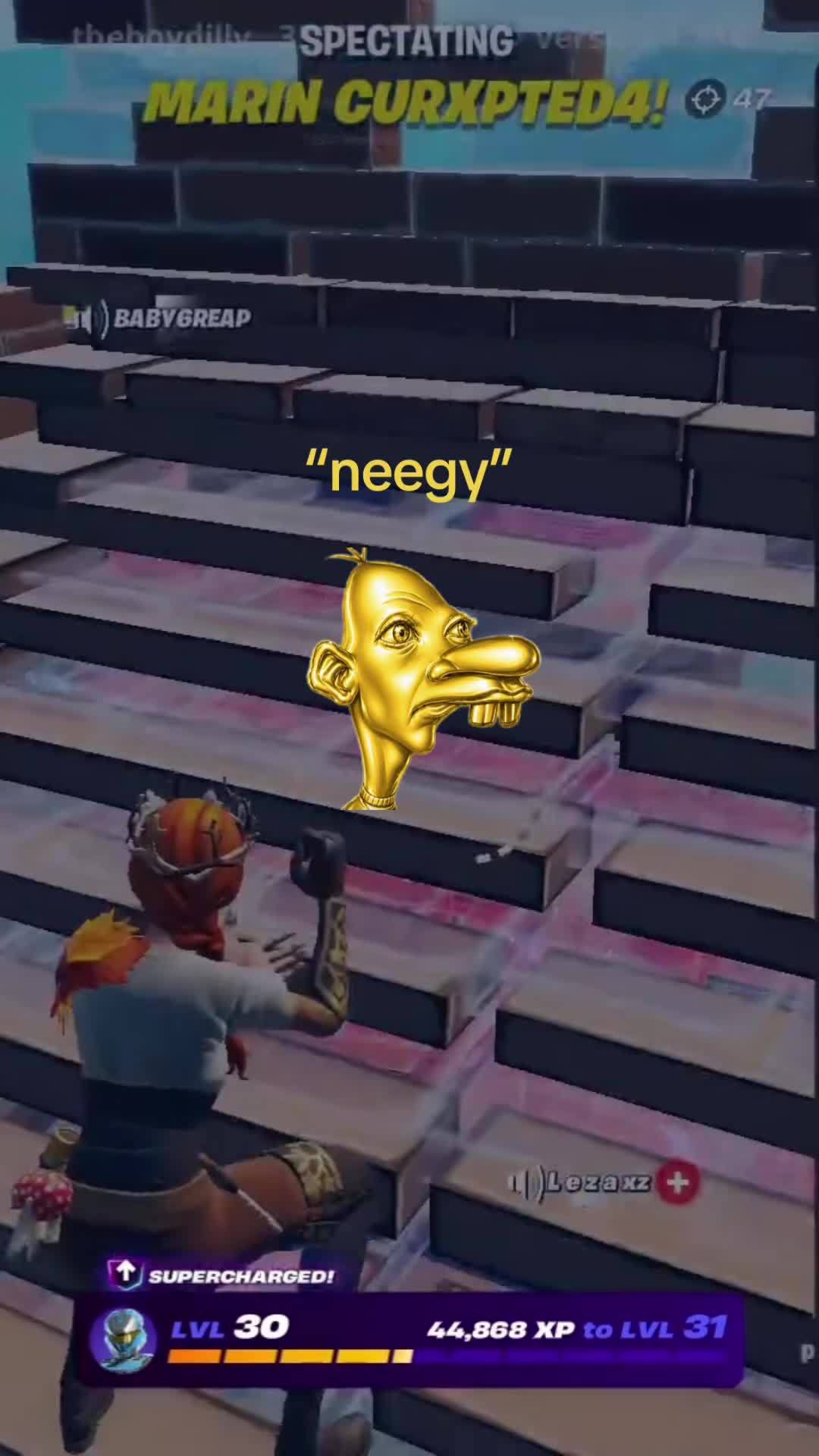
Neegy is a short-form video meme built around a gold long-faced figure, Fortnite spectator footage, on-screen text, and a reusable sound.
Meme story
Neegy Meme
Neegy is a short-form video meme whose documented source format combines Fortnite spectator-view gameplay, a gold long-faced figure, on-screen “neegy,” and a reusable sound. The earliest located verified public use is...Neegy is a short-form video meme whose documented source format combines Fortnite spectator-view gameplay, a gold long-faced figure, on-screen “neegy,” and a reusable sound. The earliest located verified public use is @1104yyh’s TikTok from July 9, 2026, captioned “new slang.” A snapshot checked...
Comments
Loading the live comment thread for this meme.