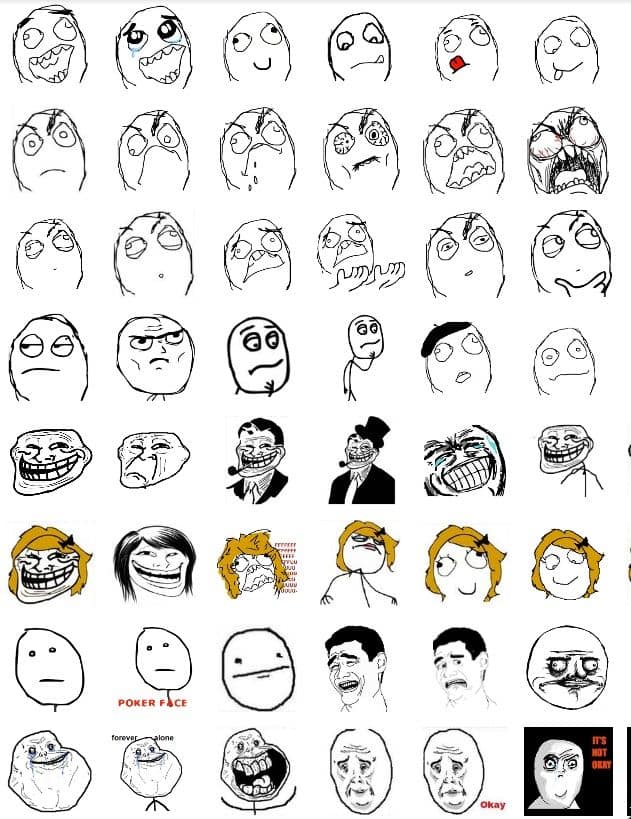
Rage Comics are short, crudely drawn stories assembled from reusable faces that represent emotions, personalities and punchlines. A creator could place Rage Guy, Trollface, Me Gusta, Forever Alone or Y U NO into a few boxes and rely on readers to understand the cast before reading the captions. The rough MS Paint look was part of the language, not a production flaw.
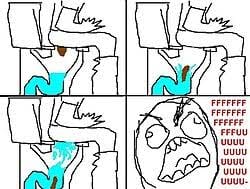
The first supported strip appeared anonymously on 4chan’s /b/ board in August 2008. Across four panels, a person sits on a toilet, experiences splashback and ends with a zoomed-in screaming face beside “FFFFFFFFUUUUUUUU—”. Reposts turned that final Rage Guy into a template, while new artists supplied other faces for different situations. Because the poster was anonymous, the exact calendar day is not responsibly known; MemePulse records August 2008 as the supported month.
The family expanded quickly but did not come from one author. Carlos Ramirez, using Whynne on DeviantArt, drew Trollface in September 2008 for a comic about pointless trolling on 4chan. Other characters came from manga panels, reaction drawings and independent webcomics before being absorbed into a shared library. Their different origins explain why the set never had one consistent drawing style.
Spread
Reddit turned the library into an everyday storytelling system. The r/fffffffuuuuuuuuuuuu community—often shortened to f7u12—hosted stories about school, dating, parents, computers and tiny domestic failures. Online generators lowered the barrier further: users selected panels and faces, added captions, and published without drawing anything from scratch.
The comics developed their own grammar. “Le” introduced actions, “derp” named generic people, and familiar faces acted like stage directions. Rage Guy marked explosive frustration; Trollface announced deliberate provocation; Forever Alone made loneliness the punchline; Me Gusta signaled an unsettling pleasure. Readers learned this vocabulary by seeing it repeated.
External media is blocked until you choose to load it.
By 2011 and 2012, rage faces had moved beyond image boards into Facebook stickers, merchandise, advertising, classrooms and live-action parody videos. Ars Technica described them as a standardized form of online communication, while The New York Times published a guide to turning daily stress into a comic. Search interest for Rage Guy, Rage Comics and Trollface peaked around February 2012.
The boom faded as generator sites filled with repetitive submissions and newer formats offered fresher voices. Yet the faces did not disappear. Trollface remained a general symbol of trolling; Y U NO survived as an image macro; reaction faces returned through ironic nostalgia, redraws and “meme renaissance” communities.
Rage Comics mattered because they separated storytelling from drawing skill. They gave millions of people a common cast, emotional shorthand and a four-panel stage for small personal stories. Later Wojak comics, starter packs and reusable character ecosystems follow the same basic idea: shared figures make a private experience instantly legible to strangers.
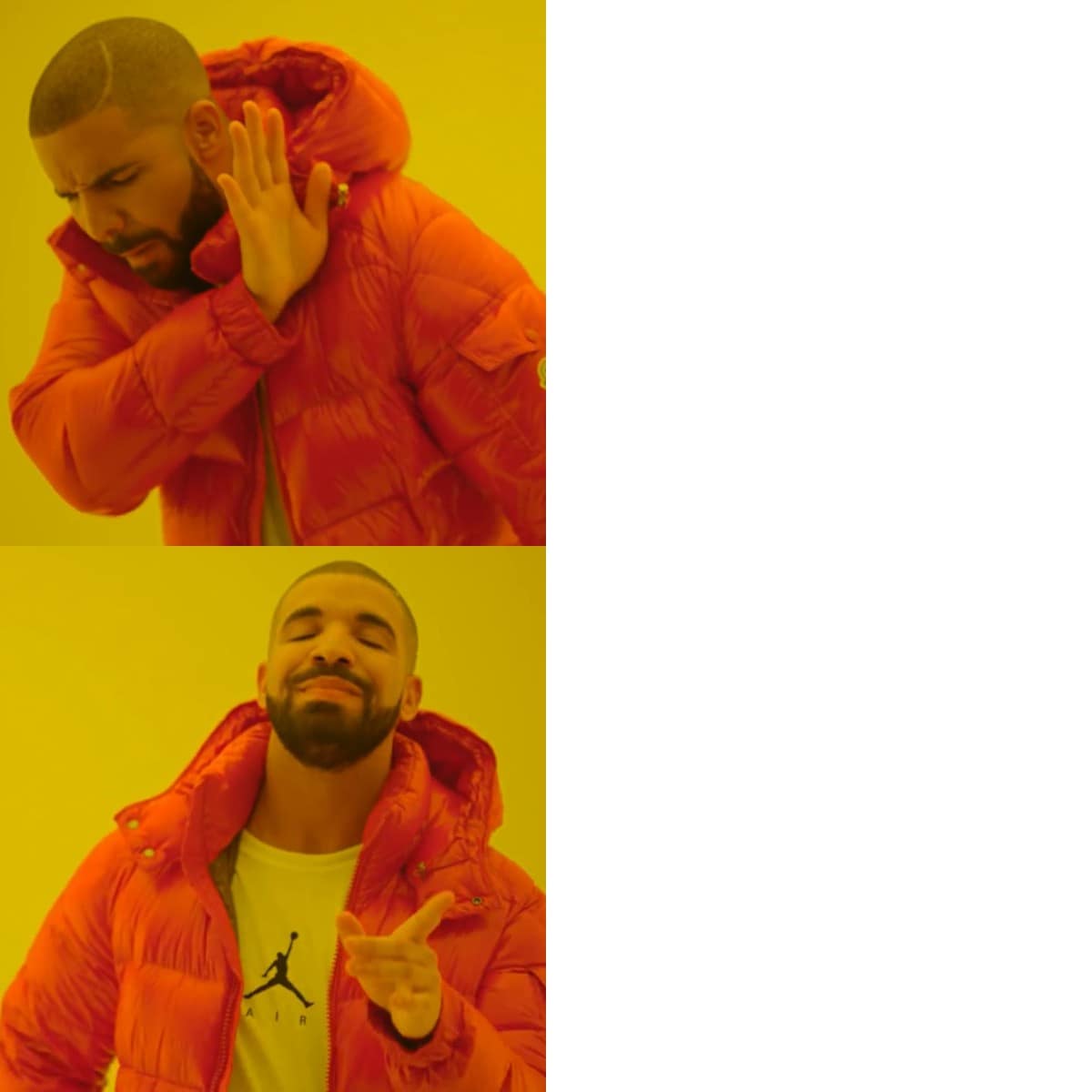
Drake Hotline Bling, often called Drakeposting, is the two-panel preference template in which Drake rejects the upper option and approves the lower one. The simple gesture supplies the grammar: no first, yes second. I...Drake Hotline Bling, often called Drakeposting, is the two-panel preference template in which Drake rejects the upper option and approves the lower one. The simple gesture supplies the grammar: no first, yes second. Its images come from Drake's 2015 ‘Hotline Bling’ music video. After the video ar...




Comments
Loading the live comment thread for this meme.