Femcel
/FEM-sel/noun
A femcel is a woman who feels excluded from intimacy, or an often ironic online persona built around loneliness, alienation, and messy emotions.
- #internet slang
- #dating and relationships
- #femcelcore
- #ironic identity
Meaning
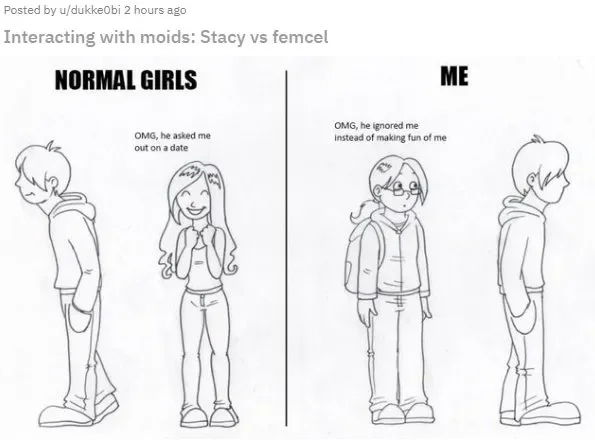
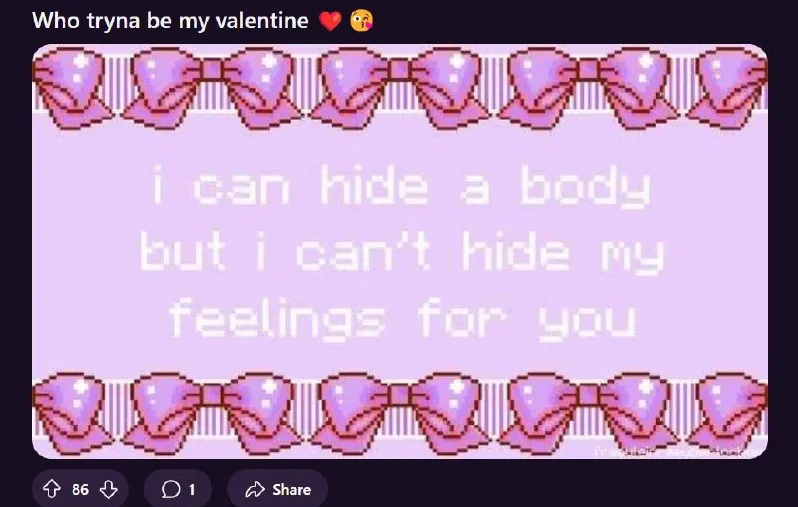
Femcel means female involuntary celibate: a woman who wants romantic or sexual intimacy but feels unable to find it. Online, the word also describes a broader, often ironic identity expressed through loneliness, dating frustration, messy emotions, and identification with troubled female characters. A femcel meme can communicate real vulnerability through exaggerated, self-mocking humor without making a literal claim about someone's sex life. Calling yourself a femcel can express solidarity or ironic pride; calling someone else one can sound insulting, especially when it implies that she is undesirable or bitter. The label alone does not establish someone's relationship status, mental health, or political beliefs.[1][4][6]
- 1. Literal identity: a woman who experiences unwanted exclusion from romantic or sexual relationships. The emphasis is on wanting intimacy and feeling unable to obtain it, rather than choosing celibacy.
- 2. Ironic online identity: a self-description or meme persona centered on alienation, romantic disappointment, and emotionally messy female experience. This use can overlap with genuine loneliness without indicating literal involuntary celibacy.
Examples
“My femcel era: staying in and posting sad memes.”
“Being a femcel isn't the same as choosing to stay single.”
“I call myself a femcel online, but I'm joking about dating frustration.”
“Calling her a femcel because she rejected you is just an insult.”
Origin and spread
Earliest use not established. Femcel developed within online discussion of involuntary celibacy, but the evidence does not identify a verified coiner or original naming event. The relationship-exclusion sense is clearly documented by Metro's June 27, 2018 reporting on Reddit communities including r/Trufemcels. That article also reproduces a June 8 reaction using the word in the same context. This establishes circulation by 2018, rather than coinage that year. By March 20, 2022, Metro was describing femcel as both a relationship-exclusion label and a TikTok trend or aesthetic. Its examples included messy-room posts, music references, and self-presentation that mixed earnest identification with satire. Hazel June's 2023 analysis for the Meme Studies Research Network explains how femcel memes use exaggerated emotions and references to characters such as Amy Dunne and Pearl to make alienation recognizable through irony. These uses did not simply replace the literal meaning. Ada Jussila's 2025 study of r/femcelgrippysockjail found that identities grounded in perceived romantic exclusion coexisted and intersected with identities expressed through irony, mental health narratives, and femcelcore aesthetics.[3]
How to use it
Pay attention to who is applying the label. In self-description, femcel can be an earnest account of loneliness, a joke about dating disappointment, or both. Applied to another person, it can become a put-down about her desirability or personality. A sad playlist, messy bedroom, or fictional-character meme does not establish that someone is celibate. Likewise, the word alone does not imply hatred of men or membership in an extremist community; research describes varied identities and community practices.
Who qualifies is contested within communities
Metro's 2022 report quotes a forum participant objecting that some TikTok users calling themselves femcels were simply experiencing depression or relationship problems. This is one reported participant's objection, but it shows why the aesthetic label and the literal identity can clash.[3]
A character reference is not a personal confession
Hazel June's analysis discusses Amy Dunne and Pearl as recurring symbols in femcel memes. Their exaggerated emotional states give posters a way to express frustration or vulnerability. Referencing those characters does not establish that a poster shares their actions or that the underlying loneliness is fabricated.[6]
Questions people ask
Does identifying as a femcel imply hatred of men or extremism?
The label alone does not establish either. PsyPost's research overview reports substantially less support for aggression and violence in the femcel discussions studied than in research on male incels. Jussila's Reddit study describes ironic misandry alongside emotional processing and varied forms of identity. Individual posts and communities still need to be assessed in context.[1][4]
How do femcel, incel, and femcelcore differ?
Incel means involuntary celibate, although it has become strongly associated with male communities and misogyny. Femcel specifies a female identity and also has broader ironic uses. Femcelcore names an associated aesthetic and expressive style, including alienation, emotionally charged memes, and troubled female characters. Participating in that style does not necessarily claim literal involuntary celibacy.[1][4][6]
Was femcel invented in 2022?
No. Metro explicitly defined the relationship-exclusion sense in June 2018 and reproduced a June 8 reaction using the word. Its March 2022 article documents a period when TikTok aesthetics and ironic uses were already circulating. That is evidence of an expansion in usage, rather than a 2022 invention; the absolute first use remains unresolved.[2][3]
Sources
- 1. PsyPost — The psychology and culture of female involuntary celibatesSupports: meaning.
- 2. Metro — Reporting on femcel communities, June 2018Supports: earliest documented use.
- 3. Metro — Femcel identity and TikTok aesthetics, March 2022Supports: origin.
- 4. WiderScreen — Irony, Exclusion, and CommunitySupports: meaning.
- 5. University of Turku — Ada Jussila's thesis on femcel identitiesSupports: form.
- 6. Meme Studies Research Network — Femcel memes and resistance within meme subculturesSupports: meaning.