FOMO
/FOH-moh/noun · initialism
FOMO is worry about missing a rewarding experience or opportunity others seem to be having.
- #internet slang
- #social media
- #decision-making
- #emotions
Meaning
FOMO, short for “fear of missing out,” is worry or restless curiosity that other people are enjoying something rewarding, or that you might pass up a better opportunity. Online, it can describe the feeling stirred by posts about a gathering, a tempting offer, or a fast-moving trend. It can be a genuine unease or a light, joking way to say you wish you were included; the surrounding context helps signal which.[1][2]
- 1. An anxious feeling that other people are having a rewarding experience or making a better choice.
- 2. A casual or joking label for wanting to join in or not miss an appealing event, offer, or trend.
Examples
“Seeing everyone's concert photos gave me FOMO.”
“I have FOMO about that weekend trip.”
“That limited-time sale is giving me FOMO, but I don't need another mug.”
Origin and spread
The term is an initialism of “fear of missing out.” Patrick McGinnis attributes it to a satirical Harbus humor column he wrote at Harvard Business School in May 2004. A 2024 Harbus profile recounts that he used the phrase in conversations and emails, then wrote the piece; it says Business Week later covered FOMO and HBS graduates spread the term by word of mouth. The profile also describes social media as accelerating its spread by increasing social input and showing curated versions of other people’s lives. These are retrospective accounts, not a directly inspected copy of the 2004 column.[2]
How to use it
FOMO is informal and can be playful or earnest. “I have FOMO” may be a light way to express wanting to join in; worry about missing out can also be real. The word alone does not tell you how distressed someone feels, so read it in context.
Two pulls behind the term
In the Harbus profile, McGinnis distinguishes “aspirational” FOMO, the desire for something bigger or better, from “herd” FOMO, the anxious question of whether to follow what everyone else is doing. The same word can describe either context.[2]
FOMO and FOBO are related, not identical
FOBO means “fear of a better option.” It describes hesitation because another choice might be better; FOMO focuses on the experience or opportunity you fear missing. The terms can overlap when weighing an invitation against other plans.[1][2]
Questions people ask
How can I tell whether someone means FOMO jokingly or seriously?
Look at the situation and phrasing. A breezy comment about a sale or outing may be playful; a description of persistent worry about choosing or missing out may be more serious. The term itself does not establish how distressed someone feels.[2]
What is the difference between FOMO and FOBO?
FOMO is fear of missing out on an experience or opportunity. FOBO is fear of a better option: hesitation because another choice may turn out to be preferable.[1]
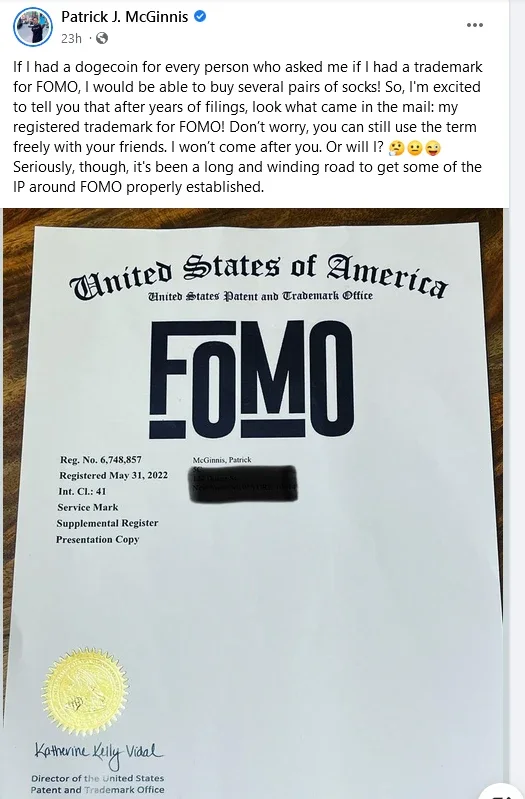
What does the trademark image show?
The image accompanying the Harvard Business School Alumni interview shows a social-media post displaying a U.S. trademark registration document for FOMO. It illustrates the term’s commercial trademark context, not its earliest use or every everyday meaning.[1]
Sources
- 1. Harvard Business School Alumni — How FOMO Became a FixtureSupports: earliest documented use, meaning.
- 2. The Harbus — FOMO No Mo’Supports: origin, meaning.