Vagueposting
/VAYG-poh-sting/noun · verb
Vagueposting means posting online while leaving out who or what the post concerns, prompting readers to guess or ask for context.
- #internet slang
- #social media
- #indirect communication
- #engagement bait
Meaning
Vagueposting is posting online while withholding context readers need to understand what you mean: who upset you, what happened, or which controversy you are reacting to. It can take the form of an unexplained emotional update, an unnamed complaint, or a reaction that assumes everyone already knows the story. Calling a post vagueposting often expresses irritation and suggests that its author wants attention, follow-up questions, or engagement. That accusation goes beyond the visible behavior: a cryptic post can also be an attempt to vent or mention something the writer cannot yet explain.[2][4][5]
- 1. Personal or emotional context: sharing a mood, grievance, or hint of news without explaining what prompted it.
- 2. Indirect criticism or commentary: reacting to an unnamed person, event, or controversy while leaving readers to identify the subject. This can overlap with subtweeting.
Examples
“Stop vagueposting—what happened?”
“Sorry for vagueposting; I can't share the details yet.”
“Calling it “the worst decision ever” without naming the decision is vagueposting.”
“I'm vagueposting about my day because the full explanation would take six paragraphs.”
Origin and spread
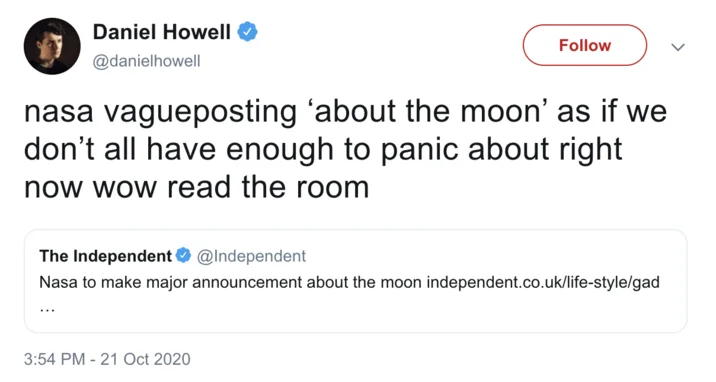
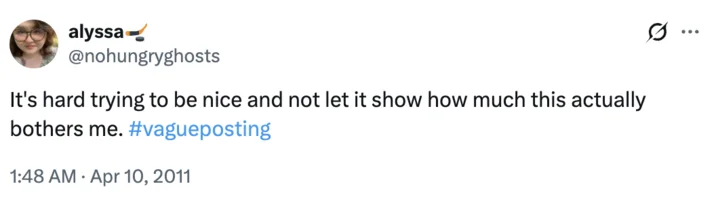
Earliest use not established. The documented background is vaguebooking, a label for cryptic Facebook status updates that invite friends to ask what is wrong. An Urban Dictionary definition dated February 19, 2009 describes that behavior. Know Your Meme reports an April 10, 2011 Twitter post by @nohungryghosts pairing an unexplained expression of frustration with #vagueposting; this is a reported early example, rather than proof of coinage. A directly readable Urban Dictionary entry dated May 5, 2015 already defines vagueposting as both emotional attention seeking and criticism of someone without naming them. The label also extended beyond personal updates: Know Your Meme reproduces an October 2020 post by Daniel Howell calling a cryptic NASA announcement vagueposting. In January 2026, Rolling Stone described renewed attention to the word on X, particularly as an accusation that posts withhold context to generate engagement. Its reporting also connected the label to a TikTok exchange about buying 365 buttons and declining to explain their use. Those examples document the term's continuing application, not its invention in 2026.[1][3][4]
How to use it
The word usually carries criticism: calling someone a vagueposter can imply that they are fishing for attention or avoiding a direct conversation. Self-description can soften that charge, especially when someone acknowledges that they cannot share details. Use the label carefully when discussing another person's motives. Missing context is observable; a plan to manipulate readers is an inference. The expression applies across social platforms and does not require a particular meme format.
Missing context does not establish a motive
The Guardian's discussion of vaguebooking describes venting and news someone cannot yet share, alongside bids for curiosity or sympathy. That distinction matters when applying the broader vagueposting label: readers can identify an unexplained update without knowing why its author left out the explanation.[5][2]
Why the 365 buttons exchange fits the label
Rolling Stone reports that a TikTok commenter named Tamara said she had bought 365 buttons to think about the passage of time. Other commenters asked what she would do with them, and she declined to explain. The article presents the exchange as vagueposting because the missing explanation became the focus of the conversation.[4]
Questions people ask
How is vagueposting different from vaguebooking?
Vaguebooking is the older, Facebook-associated label for cryptic status updates that prompt friends to ask what is happening. Vagueposting works across platforms. The boundary is flexible: The Guardian notes that actual use of vaguebooking is not strictly confined to Facebook.[3][1][5]
Can a post be both vagueposting and subtweeting?
Yes. A subtweet indirectly targets a particular person or subject while preserving plausible deniability. Vagueposting also covers unexplained moods or news with no target. An unnamed complaint can fit both labels; the 2015 Urban Dictionary definition already includes criticism of someone without mentioning them.[2][4][5]
Is every short or mysterious post vagueposting?
Brevity alone is not the issue. The label concerns missing information needed to understand what a post refers to. A short update can be clear, while a long complaint can still omit its subject. Sharing a post's background can also make it understandable to some readers while leaving others asking for context.[4][5]
Sources
- 1. Know Your Meme — VaguepostingSupports: origin, earliest documented use.
- 2. Urban Dictionary — Vagueposting definitionsSupports: meaning, earliest documented use.
- 3. Urban Dictionary — VaguebookingSupports: origin.
- 4. Rolling Stone — Vagueposting: Why 2026 Content Is All About Keeping You ConfusedSupports: meaning, origin.
- 5. The Guardian — Vaguebooking? Subtweeting? Supertweeting?Supports: meaning.