Cancel culture
/KAN-səl KUL-chər/noun
Cancel culture is a contested label for public backlash that withdraws support from someone over perceived wrongdoing, and for the dispute over whether that response is accountability or excessive punishment.
- #internet slang
- #online backlash
- #public discourse
- #accountability
- #call-out culture
Meaning
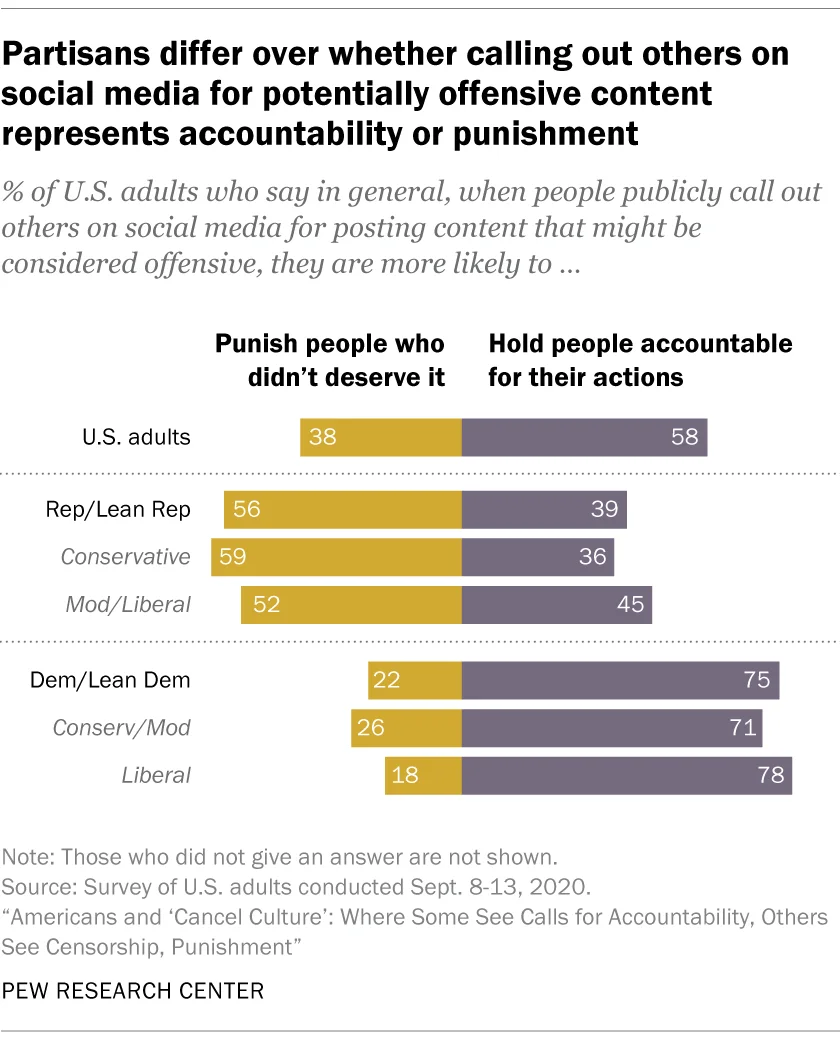
In internet and political discussion, cancel culture describes public criticism and collective withdrawal of support from a person, organization, or work over something considered objectionable. Some use it to describe accountability; others use it critically to suggest censorship, a pile-on, or punishment out of proportion to the offense. It is not a neutral synonym for any disagreement: the label often conveys the speaker’s judgment about the backlash and its consequences.[1][5]
- 1. A perceived pattern of public criticism, boycotts, or calls for consequences after someone is judged to have said or done something objectionable.
- 2. A disputed label for that response: depending on the speaker, it can frame the response as accountability or as unfair, censorious punishment.
Examples
“The backlash over one post turned into a cancel culture debate.”
“She called for accountability, but rejected the cancel culture label.”
“Whether this is cancel culture depends on how you weigh the criticism and consequences.”
Origin and spread
The current phrase combines “cancel,” used as a slang verb for withdrawing support, with “culture,” framing such actions as a broader social pattern. Vox traces the verb’s spread through Black Twitter in 2015, where it could be used jokingly or seriously and came to refer to celebrities and organizations as well as acquaintances. Business Insider reports notable growth of the exact phrase in 2016–17, particularly on Black Twitter, and cites Shanita Hubbard’s November 2017 use while discussing backlash against Gabby Douglas. An earlier 2014 tweet used the same words about television renewals and cancellations, not the modern social sense. Vox links the verb to a line in New Jack City, but screenwriter Barry Michael Cooper later disputed Vox’s attribution of the scene’s writing; that reported connection does not establish a definitive origin for the modern phrase.[2][4]
How to use it
The phrase is context-dependent, but often carries a criticism of the scale or fairness of a backlash. To describe public criticism without implying that support was withdrawn or consequences sought, “call-out” may be more precise; in practice, the boundary can blur.
The label takes a side
Pew’s survey found that respondents described cancel culture in sharply different ways, including accountability, censorship, and mean-spirited attacks. Calling a backlash “cancel culture” can therefore express a view about its fairness, not just name the criticism itself.[1]
Calling out versus canceling
Vox describes cancel culture as a possible escalation from pointing out a problem to calling for a boycott or other consequences. The distinction is useful, but not rigid: public criticism and calls to withdraw support can occur together.[2]
A disputed origin story
Vox connects the slang verb to a line in New Jack City, while screenwriter Barry Michael Cooper later said Vox assigned the scene to the wrong writer and that he wrote it. The film reference is reported context, not a settled account of who coined the modern phrase.[2][4]
Questions people ask
Why isn’t the 2014 tweet the first known use of the modern meaning?
Business Insider reports that the tweet referred to television “renew/cancel” culture, and that its author did not consider “cancel culture” a legible phrase at the time. It documents the same words, but not the modern social sense.[3]
Can calling someone out count as cancel culture?
Sometimes, but the terms highlight different parts of a response. Vox describes calling out as pointing to a problem and canceling as a possible escalation toward a boycott or consequences; real cases can combine both.[2]
Why do people disagree about whether cancel culture is harmful?
The phrase is used for different judgments about public backlash. In a PBS discussion, Thomas Chatterton Williams emphasized rapid responses that can reach employers, while Gabe Schneider argued that social platforms amplify voices and that the label can overlook longer-standing exclusions.[5]
Sources
- 1. Pew Research Center — Americans and ‘Cancel Culture’Supports: meaning.
- 2. Vox — Why we can’t stop fighting about cancel cultureSupports: origin.
- 3. Business Insider — History of the phrase and public cancellationSupports: earliest documented use.
- 4. Barry Michael Cooper on X — Post disputing the New Jack City writing attributionSupports: origin.
- 5. PBS NewsHour — 'Cancel culture' debate bubbles up in politics and beyondSupports: meaning.