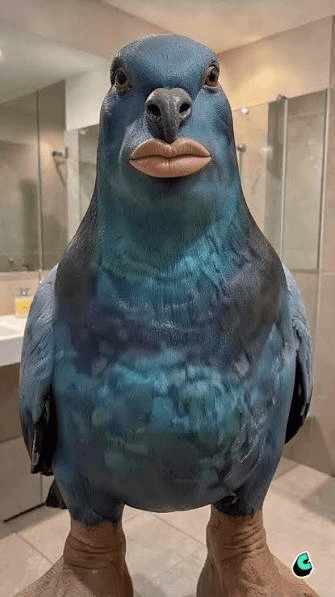
uncanny valley
/un-KAN-ee VAL-ee/noun
Meaning
A feeling of eeriness, discomfort, or revulsion produced by a robot, digital character, prosthetic, image, or other object that closely resembles a human without looking fully natural. The term is also used for the apparent drop in emotional acceptance that can occur as an artificial figure becomes more humanlike but remains visibly or behaviorally off.[1][2]
- 1. The uneasy feeling caused by an almost-human robot, avatar, face, voice, or animation.
- 2. The proposed dip in familiarity or emotional affinity between an artificial figure and a real human as human resemblance increases.
- 3. A casual description of a visual or behavioral detail that makes an otherwise realistic person or character seem creepy, artificial, or not quite alive.
Examples
“That AI portrait is deep in the uncanny valley.”
“The eyes look real, but the smile sends it straight into the uncanny valley.”
“This game avoids the uncanny valley by giving every character a stylized face.”
“The new avatar is realistic enough to be impressive and weird enough to hit the uncanny valley.”
“Why does that mannequin look like it knows my name? Uncanny valley.”
Origin and spread
The concept was proposed by Japanese roboticist Masahiro Mori in a 1970 essay titled "Bukimi no Tani," usually translated as "The Uncanny Valley." Mori described a drop in human affinity for robots and other artificial figures as they approached human likeness without fully achieving it. The English phrase itself is documented in Jasia Reichardt's 1978 book Robots: Fact, Fiction, and Prediction. Mori's original essay received little attention at first; IEEE reports that the idea began attracting wider attention after a 2005 humanoids conference and later spread through robotics, computer animation, film, video games, and online discussion.[1][2]
How to use it
Use uncanny valley when the problem is near-human resemblance that feels subtly wrong, not simply when something is frightening, ugly, or unrealistic. In casual online speech, people often apply it to AI-generated faces, CGI, mannequins, masks, voice clones, and edited photos. The phrase is widely understood outside robotics, but it usually suggests an almost-human mismatch rather than ordinary creepiness.
Sources
- 1. IEEE Spectrum — The Uncanny Valley: The Original Essay by Masahiro MoriSupports: meaning, origin.
- 2. IEEE Spectrum — An Uncanny Mind: Masahiro Mori on the Uncanny Valley and BeyondSupports: meaning, origin.